The document they read out loud was a declaration. The document that decides the outcome is a grid plan
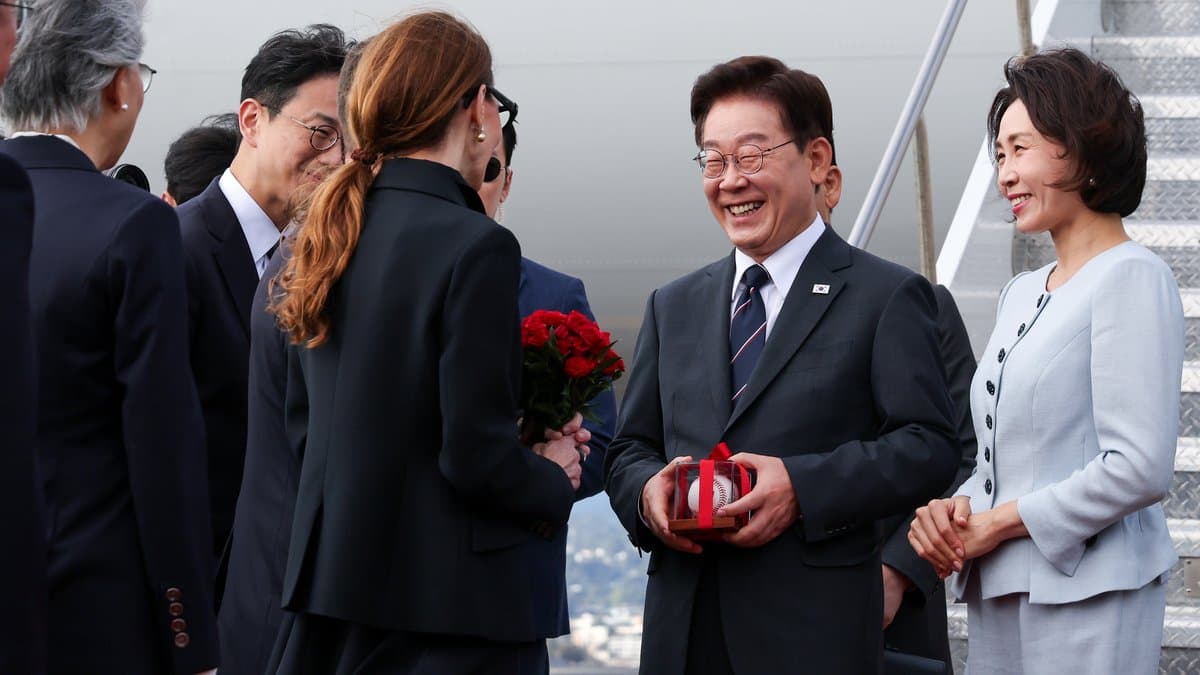
Here's the deal: on Friday, July 24, San Francisco hosted a room containing a sitting Korean president, the chairmen of Korea's four largest conglomerates, and roughly 150 global big-tech executives. The event was the San Francisco AI Summit, organized by Korea's Ministry of Science and ICT. President Lee Jae-myung used it to announce the "San Francisco AI Declaration," built around the principle that AI should benefit everyone, with the stated goal of positioning Korea as a core node in the global AI ecosystem.
The guest list was the actual news. Jensen Huang of Nvidia, Sam Altman of OpenAI, Dario Amodei of Anthropic and Hock Tan of Broadcom were all present. On the Korean side: Samsung Electronics chairman Lee Jae-yong, SK Group chairman Chey Tae-won, Hyundai Motor Group chairman Chung Eui-sun and Naver founder Lee Hae-jin. Three frontier-lab CEOs and the top of Korean industry in one room is not a routine arrangement. As a photograph, it is a complete diplomatic success.
To read the summit properly, though, you have to rewind one month. On June 29, standing between Lee Jae-yong and Chey Tae-won in Seoul, President Lee announced a ten-year public-private plan worth 1,350 trillion won — roughly $880 billion — covering semiconductors, AI data centers and robotics. The Silicon Valley trip was the follow-up call: a trip to tell American partners that the number is real.
And the number probably is real, in the sense that the companies intend to spend it. The problem is that everything the money buys consumes electricity, and the electricity plan does not yet exist as a document. This piece walks through what actually happened at the summit, and why the construction schedule for power transmission matters more than the headline total.
Who was in the room, and what each of them was carrying
For the Lee administration, the San Francisco stop was the first leg of an eleven-day tour through the US and South America. Politically, the "AI alliance" framing solved a specific problem. Korea occupies an awkward seat in the American reordering of semiconductor supply chains. Samsung and SK Hynix are indispensable suppliers to US big tech, but they also operate large production facilities in China and remain plausible targets for tariffs and export controls. A president reading a declaration alongside frontier-lab CEOs is an attempt to resolve that ambiguity into a single sentence: we are on your side.
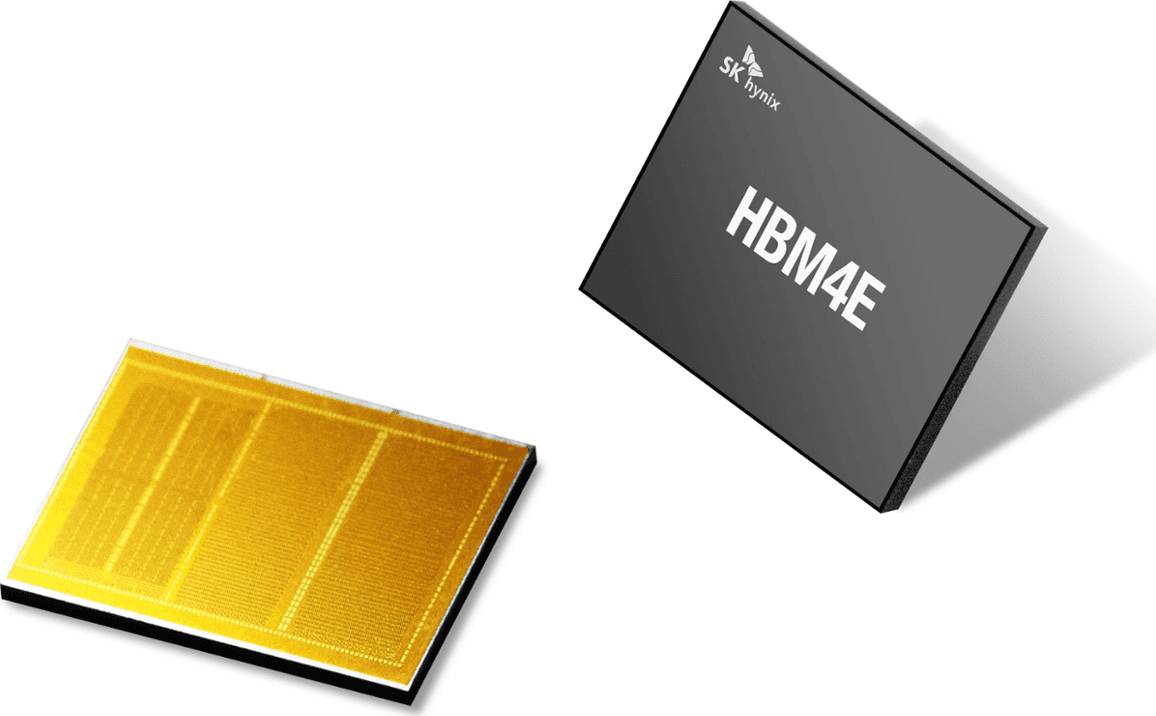
Samsung Electronics and SK Hynix arrived with more practical paperwork. Together the two companies hold roughly 80 percent of the global market for high-bandwidth memory. In practice that means anyone building an AI accelerator has to go through one of them. Bloomberg reported that both companies were set to sign very large chip supply agreements with US firms around the summit. Long-term supply contracts are the best gift you can hand a memory maker. Memory is a cyclical business where boom and bust historically flip on roughly a three-year rhythm; a five-year volume commitment flattens that amplitude considerably.
Naver is a different kind of participant. Naver is not a supplier — it is a buyer and an operator. In June it announced a gigawatt-scale AI factory alliance with Nvidia, and actually building that requires capital measured in the tens of billions of dollars. Lee Hae-jin went to Silicon Valley to raise money more than to sell anything. Hyundai Motor Group represents yet another axis: physical AI. Robots and autonomous systems, which is to say the point where AI leaves the software layer and starts occupying floor space.
The American calculus is equally legible. For Jensen Huang, Korea is a three-layered relationship at once: a supplier he buys memory from, a customer he sells GPUs to, and a bridgehead into Asia. At the 2025 APEC summit Nvidia pledged to deploy 250,000 GPUs across Korea, and the physical space required to honor that pledge is precisely the data center capacity now being planned. For Altman and Amodei, Korea is not yet a major revenue market. What it is instead is scarce: a country with both the willingness and the capital to actually build compute, and a regulatory posture that has not hardened against them. Anthropic signed a memorandum of understanding with Korea's Ministry of Science and ICT on AI safety, which is closer to norm-setting than to market entry.
Breaking down 1,350 trillion won: 800 for fabs, 550 for data centers
Take the headline number apart and it splits into two blocks. First, roughly 800 trillion won goes to semiconductor manufacturing — Samsung and SK each building two new fabs in Korea's southwest, four plants in total. Second, roughly 550 trillion won goes to AI data centers, with Naver among the companies expected to help build out 8.4 gigawatts of AI data center capacity by 2029.
The character of the money matters as much as its size. Most of the 1,350 trillion won is corporate capital expenditure, not state fiscal spending. It is money Samsung, SK and Naver have said they will take off their own balance sheets, not money the government is appropriating. Two things follow. Execution is tied to corporate earnings — if the memory cycle turns, the plan bends with it. And the government's tools for compelling execution are limited to permits, land and grid access rather than direct funding leverage.
| Component | Scale | Deadline | Who pays |
|---|---|---|---|
| New semiconductor fabs | ~800 trillion won | 10 years | Samsung, SK Hynix (2 each) |
| AI data centers | ~550 trillion won | By 2029 | Private, incl. Naver |
| Data center capacity target | 8.4 GW | 2029 | Public-private |
| Nvidia GPU deployment | 250,000 units | 2025 APEC pledge, in progress | Nvidia + local partners |
| Global HBM share | ~80% | Current | Samsung + SK Hynix |
There is a row missing from that table, and it is the important one: power. 8.4 gigawatts is hard to intuit, so here is a calibration. Tom's Hardware noted that a single megacluster under this plan corresponds to roughly a quarter of Seoul's entire electricity demand. A typical nuclear reactor produces about one gigawatt, so 8.4 gigawatts means data centers consuming the output of more than eight reactors. Water compounds the problem. Fabs and data centers are both heavy water consumers, and the utility infrastructure in the southwestern provinces was not designed for this load.
The individual deals coming out of the summit are progressing on their own track, largely independent of that structural constraint. Shinsegae signed a 250-megawatt data center partnership with Reflection AI under the US Department of Commerce's American AI Exports Program, and an Amazon subsidiary committed $5 billion to Korea. These are the credible ones precisely because they are small. 250 megawatts is buildable. 8.4 gigawatts is a different category of claim.
What each party actually walks away with
The Korean government walks away with positioning. Once Korean firms are named as partners inside an American AI export program, Seoul has a citable basis for arguing in future tariff or export-control negotiations that it belongs on the allied side of the ledger rather than the regulated side. The declaration itself carries no binding force, but documents like this exist to be quoted later. The quotability is the deliverable.
Samsung and SK Hynix walk away with volume visibility. As noted, memory is cyclical, and long-term supply agreements smooth the cycle. That matters acutely right now: the Philadelphia Semiconductor Index fell more than 20 percent from its late-June peak and entered a bear market on July 17, with the sector shedding trillions in value. In that environment, "we have five years of volume booked" becomes a share-price defense. The inverse also holds — if these agreements land as MOUs without disclosed volumes and terms, the market will read it as thin.
Nvidia gets supply security and market expansion in the same trip. Locking in HBM allocation is existential for Huang, and selling 250,000 GPUs into Korea is a reasonable side business. Layer on the $300 million joint research lab with KAIST announced the same week, and the talent pipeline gets bundled in too. Every additional layer makes Nvidia's architecture harder to migrate away from inside Korea.
OpenAI and Anthropic get something more subtle. Korea is not a large revenue market for either of them today. What Korea offers is a jurisdiction that is building real compute and has not yet written its rules. Anthropic's safety MOU with the science ministry is a bid to shape those rules early, which over a longer horizon helps prevent European-style prescriptive regulation from propagating across Asia. That is worth more than a quarter of enterprise bookings.
Precedents: the ones that worked, and the ones that didn't
National semiconductor and AI investment declarations have become a common genre over the past few years, which gives us a decent sample to reason from. On the success side, the US CHIPS Act was a $52.7 billion, five-year program at announcement, and concrete actually got poured — TSMC Arizona, Intel Ohio, Samsung Taylor. The execution was messy but real. Two things made it work: the subsidies were disbursed as actual cash, and the sites were chosen in places that already had grid capacity.
The failures rhyme differently. The Wisconsin Foxconn project promised $10 billion in investment and 13,000 jobs, and delivered a facility a fraction of that size. The gap between announcement and execution came from a demand forecast that was wrong and a local government that could not absorb the infrastructure cost. The Saudi and Emirati AI investment declarations sit in a similar waiting room today — the capital is unambiguous, but the workforce, the power and the US export-control regime remain open variables.
Three variables will decide which side Korea's plan lands on. First, when the power plan appears. Without generation and transmission planning sized to 8.4 gigawatts, the data centers stall at the permitting stage rather than the construction stage. Second, the memory cycle. Samsung and SK can commit 800 trillion won because HBM is selling well right now. Third, local consent — four fabs in the southwest requires water rights, land and community agreement.
Look at Korea's large industrial programs that actually finished, and one pattern stands out: the site and the power were secured before the announcement. That was true of Pyeongtaek, and true of SK's M16 in Icheon. This plan inverts the sequence — headline total first, site and grid to be arranged afterward. Which is why the date of the first shovel is the honest credibility metric here, not the size of the number.
How the competition responds
Taiwan will likely defend quietly. TSMC has already announced an additional $100 billion for Arizona and controls the advanced packaging bottleneck, CoWoS. Korea can manufacture all the HBM it wants; the process that bonds it to a GPU still runs through Taiwan. TSMC's counterplay is not a new announcement but a tighter grip on the chokepoint it already holds.
Japan moves along a different axis. Rapidus is targeting 2-nanometer production and its government subsidy structure is more direct than Korea's. But Japan's real leverage sits in materials and equipment rather than leading-edge logic. If Korea builds four more fabs, Japanese materials suppliers book more revenue. That is closer to riding the wave than competing with it.
China's response will be the most direct. In the same week, Chinese GPU designer MetaX confidentially filed for a Hong Kong listing. Beijing is pushing national resources toward severing Nvidia dependence, and reducing reliance on Korean memory is part of the same program. If a Chinese memory maker such as CXMT makes meaningful progress on HBM, Korea's 80 percent share stops being a negotiating card. That scenario could arrive well before 2029.
There is also a reaction risk inside the US. Micron has no reason to enjoy watching two Korean firms sweep long-term contracts with American hyperscalers, and part of the US policy establishment already views an HBM supply chain that is 80 percent Korean as a concentration risk in itself. The more successful this summit turns out to be, the louder the domestic argument for onshoring HBM becomes.
So what actually changes
For engineers and developers, nothing changes immediately. What may change after 2027 is the cost and the wait time for renting GPUs domestically in Korea. If even a portion of the 8.4 gigawatts comes online, local cloud GPU supply increases and the current need to reach for overseas regions eases. If you are planning capacity, treating the first half of 2027 as the inflection point is reasonable, and assuming continued scarcity until then is the safer default.
For investors, three things are worth watching. First, whether the agreements announced around the summit are MOUs or binding supply contracts — only contracts with stated volumes and durations convert into earnings. Second, the timing of the power plan; when the energy ministry publishes a supply-and-demand framework sized to 8.4 gigawatts, that is the real catalyst for data-center-linked equities. Third, the groundbreaking schedule for the southwestern fabs, since 800 trillion won spread over ten years means the first two years of actual capex tell you far more than the total.
For general users, the distance is longer. One thing worth remembering: models trained on this infrastructure will handle Korean substantially better than today's do. The Nvidia-KAIST lab explicitly targets agentic AI tuned to the Korean language and Korean industrial contexts, which points the same direction. Search, mapping and customer service are where that will surface first.
At the industry level, the summit was a position-confirmation event. Korea holds a three-way relationship with Nvidia — supplier, customer and channel — that no other country has, and that is genuine leverage. It is also another word for dependency. The declaration did not address how to think about a sovereign AI strategy whose silicon architecture is owned by an American company, and that question is not going away.
🥄 Three Things You're Probably Wondering
— Is the $880 billion actually going to be spent? Most of it is corporate capex intent, not a legally binding commitment. It comes off Samsung's, SK's and Naver's balance sheets rather than the national budget, so a downturn in the memory cycle would force revisions. Watching the first two years of disbursement tells you more than the ten-year headline.
— Is the power constraint genuinely serious? It won't stop the plan, but it will set the pace. 8.4 gigawatts is the output of more than eight nuclear reactors, and analysts have pointed out that a single megacluster equals roughly a quarter of Seoul's electricity demand. Transmission usually takes longer to build than generation, so completion dates for the data centers will likely be dictated by grid schedules.
— Were contracts actually signed at the summit? Reports indicate large agreements including long-term HBM supply were set to be signed around the event, but disclosed amounts and durations remain limited. The deals with concrete numbers — Shinsegae's 250-megawatt project with Reflection AI, Amazon's $5 billion — are the firmer ones. For the rest, it's too early to call until terms are published.
Sources
- Seoul Economic Daily — President Lee Arrives in San Francisco, Meets Jensen Huang (2026-07-25)
- Korea Economic Institute of America — What the San Francisco AI Summit Means for U.S.-Korea Tech Cooperation
- Bloomberg — Samsung, SK to Spend $880 Billion to Drive Korea's AI Lead (2026-06-28)
- Bloomberg — Samsung, SK Hynix to Ink Large Chip Supply Deals With US Firms (2026-07-24)
- Tom's Hardware — Power and water lag the fabs in South Korea's $880 billion chip and AI plan
- TechSpot — South Korea is betting $880 billion that the next AI race will be won in hardware, not software
- The Asia Business Daily — President Lee Expands 'AI Alliance' in San Francisco with Consecutive Meetings
- Tom's Hardware — Samsung and SK hynix set to announce massive deals with leading U.S. tech firms
Numbers and criteria are as of announcement and may change. Investment calls are yours to make!