There's only one reason to list twice: you need a great deal more money
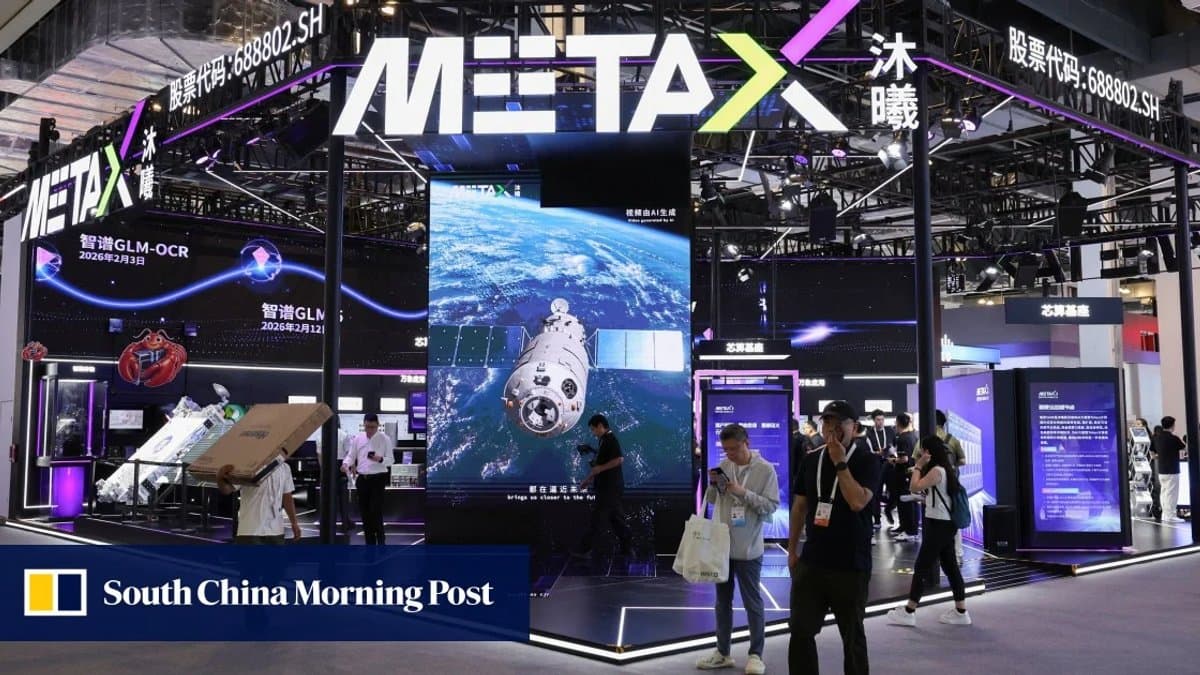
Here's the deal: on July 24, reports emerged that MetaX, a Shanghai-based GPU designer, had confidentially filed for a Hong Kong listing. The company is targeting an IPO by year-end, working with Huatai International on the share sale. Ordinary IPO news, except for one detail — MetaX is already a public company.
MetaX listed on Shanghai's STAR Market in December 2025. Priced at 104.66 yuan, the stock opened its first session at 700 yuan, up 569 percent, making it the fourth-best trading debut on the Shanghai market that year. Seven months later, it's lining up a second listing.
The financials explain why. MetaX's 2025 revenue rose 121.3 percent to 1.6 billion yuan, roughly $230 million. Its net loss for the same year was 830 million yuan. Revenue doubled and the company still lost more than half its revenue, which it attributes to heavy R&D spending and Nvidia's dominance of the market.
Building GPUs is extremely expensive. Building GPUs in China is more expensive still. This piece covers why, and how far the Chinese GPU companies now queuing at the Hong Kong exchange have actually gotten.
The cast: three AMD alumni and a company built in 2020
MetaX was founded in 2020 by three veterans of AMD — chairman Chen Weiliang and co-CTOs Peng Li and Yang Jian. Engineers leaving American GPU companies to found Chinese GPU companies was the archetypal semiconductor startup pattern around 2020. As US-China technology tensions hardened, state capital and local government funds poured into the category, and talent moved with the money.
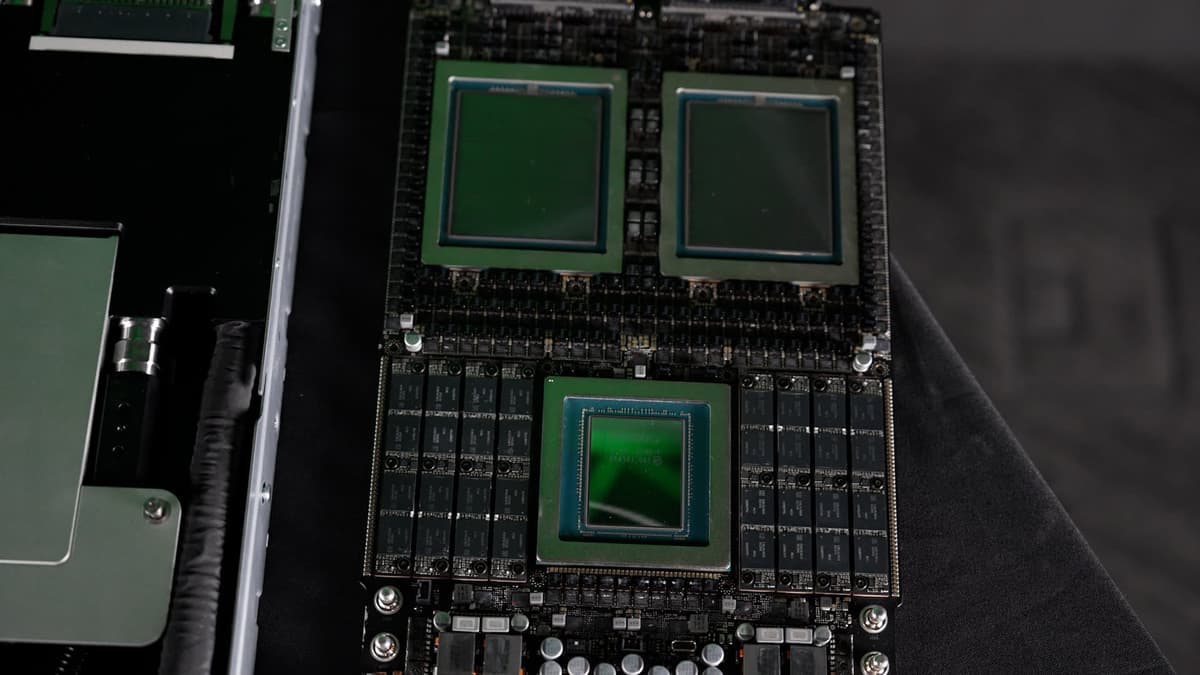
The flagship product is the C600. It's a general-purpose GPU whose specifications land somewhere between Nvidia's A100 and H100. It uses HBM3e memory and supports FP8 precision for more power-efficient AI training, with 144GB of memory. The company emphasizes that it is "fully domestically produced," a phrase that often carries more weight in China's semiconductor market than the performance numbers do — it's frequently decisive for government procurement and state-owned enterprise orders.
On raw performance the C600 is not leading-edge. The H100 is a 2022 part and Nvidia has shipped two generations past it. But that comparison is only partly relevant inside China. With export controls keeping Nvidia's current products out, the real competition isn't the H100 — it's whatever you can actually buy. And Beijing keeps tightening requirements for domestic silicon in state-owned enterprises and public data centers.
MetaX isn't walking this path alone. Biren Technology, Iluvatar CoreX and Moore Threads have all listed in Shanghai or Hong Kong since late 2025. The entire Chinese GPU sector is raising capital in public markets simultaneously, which looks less like a set of independent corporate decisions and more like industrial policy expressed through the exchange.
What the second listing is supposed to buy
MetaX's June filing lays out the intended use of proceeds. The company plans to issue H shares — Hong Kong-listed stock — equal to no more than 5 percent of its enlarged capital, with the money earmarked for next-generation GPU development, software ecosystem work, supply-chain investments and potential acquisitions.
| Item | Detail |
|---|---|
| Listing type | Hong Kong H shares, confidential filing |
| Target timing | By end of 2026 |
| Bank | Huatai International |
| Issue size | Up to 5% of enlarged capital (per June filing) |
| Use of proceeds | Next-gen GPU, software ecosystem, supply chain, M&A |
| 2025 revenue | 1.6B yuan (+121.3%) |
| 2025 net loss | 830M yuan |
| Existing listing | Shanghai STAR Market, December 2025 |
The line to watch is "software ecosystem." The wall every Chinese GPU company hits is not hardware performance — it's software. Nvidia's real moat is CUDA, and replacing two decades of accumulated libraries, frameworks and developer habits is far harder than adding transistors. Even if the C600 genuinely sits between an A100 and an H100, effective performance collapses if developers have to port their code first.
The choice of Hong Kong is worth noting too. Hong Kong offers better access to foreign capital than Shanghai and allows international institutional investors onto the register. How much American money actually participates is uncertain given tightening US restrictions on Chinese tech investment, so the realistic target pools are Hong Kong, Middle Eastern and Southeast Asian capital.
The timing is the interesting part. In the same week, the Philadelphia Semiconductor Index entered a bear market, triggered by Moonshot AI's open-weight Kimi K3 model. While the narrative that China achieves comparable results with far less compute drags down Western chip equities, a Chinese GPU company is raising listing capital against that very narrative.
What each party gets
MetaX gets cash and time. Losing 830 million yuan a year while developing a next-generation architecture — reportedly the C700 — requires a continuous funding supply. The STAR Market listing raised one round, but GPU development cycles run three to four years and each generation costs hundreds of millions of dollars. A second listing buys another lap.
Beijing gets acceleration on supply-chain substitution. Reducing Nvidia dependence is national strategy, and that requires at least a few domestic GPU companies to survive. Listing several at once is also risk diversification — if one of four succeeds, the objective is met. Funding the experiment through capital markets rather than the fiscal budget is the efficient way to run it.
The Hong Kong exchange benefits as well. Its IPO market went through a lean stretch in recent years, and the chain of Chinese hard-tech listings is reviving volume. Semiconductors and AI remain a compelling narrative for international investors, and Hong Kong is one of the few venues offering access to it.
Nvidia is the one this squeezes. Its China revenue share already shrank dramatically after export controls, but the longer-term issue is substitutes taking root. A customer that has deployed infrastructure on domestic silicon and ported its software is unlikely to come back even if the rules loosen. That's one of the unintended consequences of export controls.
Precedents: what worked and what didn't
China's semiconductor localization efforts include sharply divided outcomes. The success case is Huawei's Ascend line. Backed into a corner by export controls, Huawei built its own accelerators and software stack (CANN), and today they function as a genuine alternative for AI training inside China. What made it work was investing more heavily in software and customer support than in hardware — Huawei embedded engineers at customer sites and did the porting for them.
The failure case is Wuhan Hongxin (HSMC). It launched as a 100 billion yuan fab project, ran out of money in 2020, and the ASML tool it had acquired ended up pledged as collateral. The cause was governance, not technology: local government funding, inflated plans and unproven management. Cases like it were not rare during China's semiconductor boom.
Within GPUs specifically, Biren Technology is the instructive middle case. Once hyped as "China's Nvidia" and heavily funded, it landed on a US restricted list, lost TSMC manufacturing access, and saw product launches slip. It recovered by shifting to domestic foundries, but the episode showed how a single external variable can destabilize an entire business. That's exactly why MetaX emphasizes full domestic production.
Judging which way MetaX goes comes down to two things. First, actual C600 mass production timing and volume — whether the year-end target holds, and whether initial customers are state procurement or genuine commercial demand. Second, software stack maturity, since how few modifications a developer needs to move CUDA code determines real adoption.
How the competition responds
Nvidia's options are limited. Export controls prevent it from selling current products into China, and even compliance-tuned variants face Beijing discouraging state-owned enterprises from buying them. What Nvidia can do is widen the gap everywhere else, which is what it's doing. The consensus read is that China is close to a written-off market.
Huawei is MetaX's actual competitor. The Ascend ecosystem is already the largest domestic AI computing stack in China, and its software support capability is not comparable to a startup's. But Huawei is sanctioned and cut off from leading-edge process access, and that gap is precisely the space where companies like MetaX exist. Huawei's counterplay is most likely price and support services.
Moore Threads and Iluvatar CoreX compete for the same capital pool from a similar position. What happens when they all list simultaneously is competition for funding and, more acutely, for people. China's GPU design talent pool is not deep, and four companies are fighting over the same engineers. Consolidation over the medium term looks likely, which is one way to read MetaX explicitly naming M&A among its uses of proceeds.
For Korea and Taiwan the trend cuts both ways. If Chinese GPUs establish themselves, that's an additional HBM customer — the C600 uses HBM3e, which makes it a potential buyer for Korean memory makers. But if China succeeds at localizing memory too, that demand disappears. CXMT's pace on HBM decides which side of the ledger this lands on.
So what actually changes
For developers outside China, nothing immediate. You are unlikely to encounter a MetaX GPU, and the software ecosystem is nowhere near displacing CUDA. If you build AI products for the Chinese market, though, it's worth anticipating domestic-accelerator support appearing as a procurement requirement. In some public-sector projects it already is one explicitly.
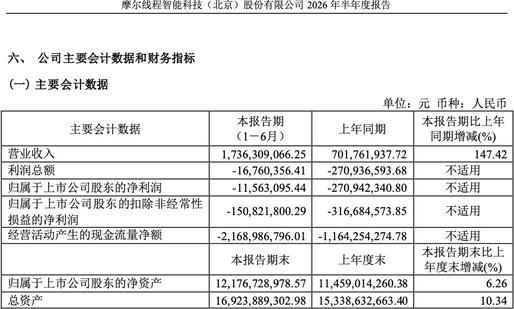
For investors, three things to watch. First, the financials that publication of the Hong Kong prospectus will force into the open — the filing is confidential, so first-half 2026 numbers will be the first look at whether the revenue-growth-versus-loss trajectory is improving. Second, the C600 production schedule, with the year-end target as the first checkpoint. Third, the raise size; if the June filing's 5 percent cap holds, proceeds are modest relative to market capitalization, which implies yet another raise later.
For the Korean semiconductor industry the effect arrives on two tracks. Near term, more Chinese GPU companies means more HBM buyers, which is positive. Longer term, faster Chinese self-sufficiency shrinks Korea's export structure into China. Which dominates depends on how quickly CXMT and its peers advance on HBM.
At an industry level, this filing signals that China's GPU sector is moving from the technology-demonstration phase into the capital-markets-scrutiny phase. Until now, state and local government capital absorbed the losses. Being publicly listed twice means explaining results every quarter. That pressure could consolidate the sector quickly, or grow it quickly.
🥄 Three Things You're Probably Wondering
— Is the C600 really H100-class? Its specs are reported to sit between an A100 and an H100, but real workload performance depends heavily on software. For GPUs, compiler and library maturity usually determines effective throughput more than benchmark numbers do, so it's too early to call until independent benchmarks exist.
— Is listing twice normal? Dual listings in Shanghai and Hong Kong are common for Chinese companies. Seven months between them is unusually fast, and the natural reading is that capital needs are large. Given the loss figures, it's an understandable choice rather than a strange one.
— Is China succeeding at GPU self-sufficiency? Partly. Substitution is progressing fastest in inference rather than training, and at mid-tier rather than leading-edge performance. With leading-edge process access blocked and the software ecosystem gap still open, "succeeded" is premature. The next two years decide it.
Sources
- South China Morning Post — Chinese GPU maker confidentially files for Hong Kong IPO amid fundraising wave (2026-07-24)
- Bloomberg — Chinese Chipmaker MetaX Plans Hong Kong Listing to Seize on Boom (2026-06-12)
- Caixin Global — Chinese GPU Maker MetaX Doubles Revenue Amid Push for Domestic Chips (2026-03-26)
- South China Morning Post — China's Nvidia challengers set for bumper IPOs amid tech self-sufficiency drive
- Techmeme — MetaX confidentially filed for a Hong Kong listing, targeting an IPO by year-end (2026-07-24)
- China Strategy — MetaX soars in frenzied debut as traders snap up second Chinese GPU maker to go public (2025-12-16)
Numbers and criteria are as of announcement and may change. Investment calls are yours to make!