When a company that sells GPUs funds a university, look at what it's actually buying
Here's the deal: on July 23, Nvidia and KAIST announced a joint AI research lab. It sits inside KAIST's Kim Jaechul Graduate School of AI, and it's a five-year, $300 million commitment. Roughly $50 million per year of that arrives not as cash but as compute, delivered through local Nvidia Cloud Partners. KAIST describes it as the first Nvidia joint AI research lab in Asia.
The research topic is agentic AI — systems that set their own goals, evaluate complex scenarios, reason across multiple steps, and collaborate with other AI agents. But there's a qualifier attached. The lab is explicitly building agents tuned to the Korean language and to Korea's industrial environment.
The lab will fund at least ten KAIST researchers annually and open Nvidia internship and full-time hiring paths. It will be led by Hyunwoo Kim, an Nvidia researcher joining the KAIST faculty in August 2026, who will coordinate with Nvidia's global research organization. The technical foundation is Nvidia's Nemotron open model family.
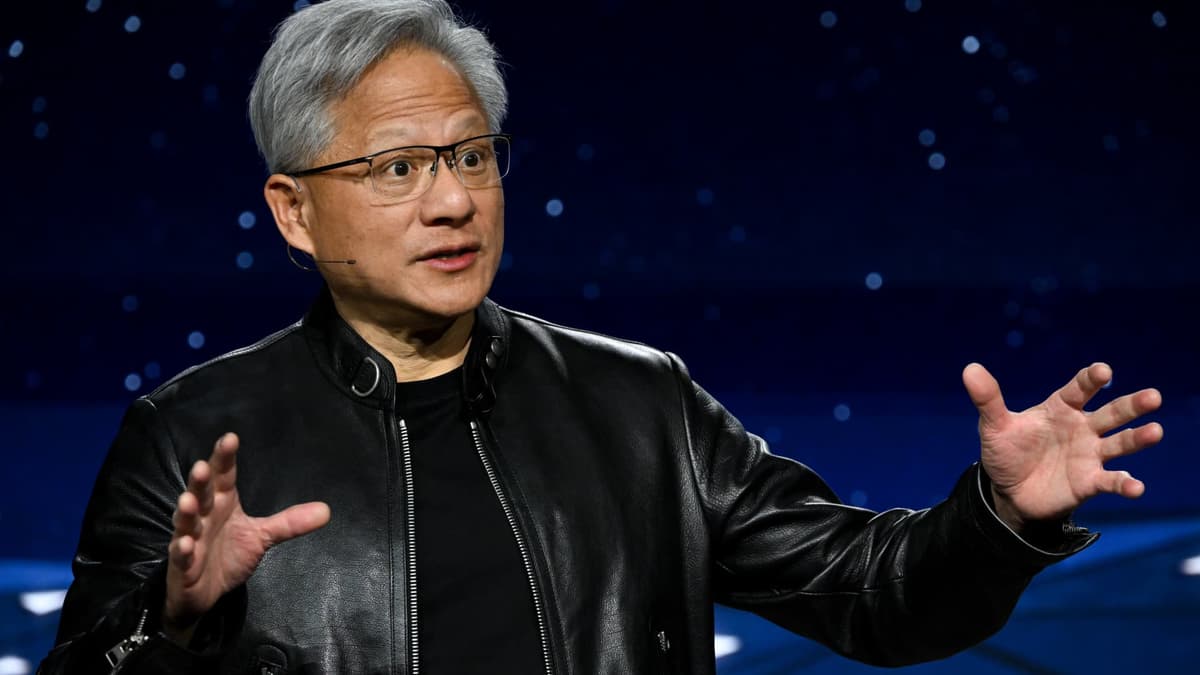
The timing isn't accidental. The Korea-US AI summit convened in Silicon Valley the same week, where President Lee Jae-myung met Jensen Huang. This lab reads like an appendix to that meeting — but it's the kind of investment that outlasts a GPU contract.
The cast: Huang's Asia strategy and the Kim Jaechul school
Nvidia funding university labs isn't new. The scale and structure here are what's different. Delivering most of $300 million as compute contributions lets Nvidia deploy inventory as an asset — lighter on cash, lighter on the income statement, and it has the effect of ensuring the university's research runs on Nvidia's stack. That isn't a criticism. It's a structure that makes sense for both sides.
KAIST's Kim Jaechul Graduate School of AI, founded in 2019, is Korea's flagship AI graduate program. It's also known for semiconductor and HBM-adjacent research, and it occupies a central position in the country's AI talent pipeline. Its perennial constraint has been compute. Having the research idea but lacking GPUs to run training at scale is the shared condition of Korean university labs. Fifty million dollars a year of compute lowers that wall considerably.
Hyunwoo Kim is the connective tissue in this structure. Moving from Nvidia research to a KAIST professorship while leading the lab preempts the failure mode that kills most industry-academic collaborations. These labs usually collapse on a mismatch — the company doesn't want papers and the university doesn't ship products — and having one person who understands both sides narrows that gap.
The Korean government is part of the picture too. The Lee administration announced a 1,350 trillion won AI and semiconductor investment plan on June 29, with talent development as an explicit line item. From Nvidia's perspective, a structure where the government builds the infrastructure and universities supply the people is close to ideal, and if its architecture becomes the default in that pipeline, the long-term lock-in completes itself.
What the $300 million actually consists of
Breaking down the announced figures:
| Item | Detail |
|---|---|
| Total | $300M over 5 years |
| Annual compute contribution | $50M (via local Nvidia Cloud Partners) |
| Researcher funding | At least 10 KAIST researchers per year |
| Talent path | Nvidia internships + full-time roles |
| Technical base | NVIDIA Nemotron open models |
| Research focus | Korean-language, Korean-industry agentic AI and autonomous systems |
| Founding lead | Hyunwoo Kim (joins KAIST August 2026) |
| Location | KAIST Kim Jaechul Graduate School of AI |
Fifty million a year across five years is $250 million, leaving roughly $50 million to spread across research funding, salaries and operations. So the center of gravity in this partnership is compute, not research grants. That distinction matters: what the university receives is not discretionary budget but compute time on a specific infrastructure.
The choice of agentic AI as the topic is strategic. Competition among frontier labs is shifting from raw model performance toward agent execution capability, and that area has no settled standard yet. Adding the qualifiers "Korean language" and "Korean industrial environment" narrows the competitive field further and raises the probability of producing results that matter. It's a far more realistic goal than trying to out-scale OpenAI on general frontier models.
Building on Nemotron is worth noting as well. Nemotron is Nvidia's open-weight model family, and basing the research on it keeps the outputs inside Nvidia's ecosystem. The university avoids having to build models from scratch; Nvidia gains real-world deployment references and improvement signal for its open models. The incentives line up cleanly here too.
What each party gets
Nvidia gets three things. First, talent. The AI researcher hiring market is extraordinarily overheated, and a university lab pipeline is far cheaper than headhunting. Naming internships and full-time roles explicitly means they aren't hiding this objective. Second, ecosystem lock-in — if Korea's next generation of AI researchers trains on CUDA and Nemotron, Nvidia's stack becomes the default wherever they end up working. Third, political capital. In dealings with the Korean government, "we don't just sell chips, we develop talent" is a useful sentence during regulatory and procurement conversations.
KAIST gets compute and access. As noted, GPUs are the binding constraint for Korean university labs, and $50 million a year of compute changes the range of research questions that are even askable. Experiments previously out of reach become feasible, and the caliber of the resulting papers changes with it. The connection to Nvidia's global research organization is a real asset in its own right.
The Korean government gets a slower brain drain. Historically, a large share of Korean AI talent has left for the US after graduate school. Being able to use frontier-class compute domestically, with an Nvidia hiring path attached, removes one reason to leave. It won't stop the flow, but slowing it has value.
The party that should be careful here is Korea's sovereign-AI discourse. The country is building talent-development infrastructure that depends on an American company's compute. That's less a bad deal than an unavoidable one, but it isn't free. How intellectual property from this lab is allocated over five years is the practically important thing to watch.
Precedents: what worked and what didn't
Corporate-university labs are an old format with sharply divided outcomes. On the success side, the MIT-IBM Watson AI Lab is the reference — IBM committed $240 million over ten years starting in 2017, and it delivered on both publication output and talent pipeline. It worked because research topics weren't subordinated to IBM's product roadmap, basic research retained real latitude, and the lab was run by co-directors from both institutions.
Failures are plentiful too. Plenty of corporate labs founded inside universities quietly shrink after three to five years or survive in name only. Two causes recur. One is that the sponsoring executive changes and the program slips down the priority list. The other is that success metrics stay ambiguous, so neither side is satisfied — measure by paper count and the company complains, measure by commercialization and the university does.
In Korea, Samsung Electronics' various university research centers offer a domestic comparison. In semiconductor process and materials they unambiguously worked as talent pipelines, but views differ on whether they produced foundational technology. When the arrangement settles into the company wanting practitioners and the university supplying them, what you have is a recruiting channel rather than a research lab.
Three variables will decide which way the Nvidia-KAIST structure goes. First, how long the Hyunwoo Kim era lasts — these labs depend heavily on individuals. Second, the publication policy: if papers and code are released openly, it functions as a university lab; if results stay in internal reports, it's an outsourced Nvidia lab. Third, whether the partnership renews. The first five years usually go smoothly; the real test is the second contract.
How the competition responds
Google and Microsoft are also expanding Asian university partnerships, but through a different mechanism. Their model centers on cloud credits and API access, with fewer physical labs. Nvidia's differentiator is that being a hardware company lets it contribute compute directly, which is structurally hard for a cloud provider to replicate.
Domestically, Naver and LG AI Research compete for the same talent pool. Naver has its own HyperCLOVA X model line and a gigawatt-scale AI factory alliance with Nvidia. Researchers coming out of this lab become candidates for those companies too, so near term it's positive for Korean industry as well. If Nvidia effectively holds first claim on hiring, the calculus changes.
China's counterpart efforts are state-directed. Huawei and Alibaba run large joint research programs at Tsinghua and Peking University at greater scale than this. But restricted access to leading-edge GPUs makes compute-contribution partnerships hard to structure there, so China's counterplay runs on talent volume instead.
Japan and Singapore are competing for the same kind of anchor investments. Singapore in particular bundles national AI infrastructure investment with university recruitment and works closely with Nvidia. That the "first in Asia" title landed at KAIST reflects both Korea's semiconductor industrial base and the current government's aggressiveness.
So what actually changes
For AI researchers and graduate students, this is a substantive change. Compute available for large-scale training experiments inside Korea increases, and an internship path connected to Nvidia's global research organization now exists. Ten researchers a year sounds small, but as positions with frontier-class compute access, competition will be intense. If you're considering applying, building background in agentic AI and Nemotron is the sensible preparation.
For industry developers this is more distant, but the prospect of Korean-specialized agent models and tooling matters. Many of the problems in building Korean-language agents today stem less from the model itself and more from a lack of understanding of Korean work environments — document formats, approval workflows, sector-specific vocabulary. That's precisely the direction this lab named.
For investors, treat it as a signal about Nvidia's regional strategy. Compute-contribution partnerships don't book as revenue, but they manufacture future demand. Tracking how many of these structures Nvidia builds across Asia, and how they correlate with regional revenue growth, tells you something about the company's medium-term positioning.
For Korea as a whole, this is the first week that infrastructure investment and talent investment were announced together. If the 1,350 trillion won plan is about building data centers and fabs, this lab is about producing the people who will run them. Neither works alone. That both are happening on an American company's architecture is a condition running through the entire program.
🥄 Three Things You're Probably Wondering
— Is the $300 million cash? Mostly not. A large share is compute contribution — roughly $50 million a year of GPU capacity delivered through local Nvidia Cloud Partners, which is a different thing from discretionary budget. By the standards of Korean university labs it's still transformative.
— Who owns what the lab produces? The announcement doesn't specify IP allocation. That clause is usually the most important term in an industry-academic lab and it's usually not disclosed. How openly papers and code get published will indirectly reveal the arrangement, and the first year of output will give something to judge.
— Will it slow the brain drain? It can slow it. Access to frontier-class compute at home removes one reason to leave. But internship and full-time paths leading to Nvidia cut the other way. Which effect dominates won't be visible until three or four years of placement data exist.
Sources
- NVIDIA Newsroom — NVIDIA and KAIST Launch Joint AI Research Lab to Accelerate AI Innovation in Korea (2026-07-23)
- KAIST News — KAIST-NVIDIA Establish Asia's First AI Joint Research Lab
- GlobeNewswire — NVIDIA and KAIST Launch Joint AI Research Lab (2026-07-23)
- Seoul Economic Daily — KAIST, Nvidia to Build $300 Million Joint AI Research Lab (2026-07-24)
- eWeek — Nvidia, KAIST Launch Seoul Agentic AI Lab Under $300M Partnership
- StockTitan — NVIDIA-KAIST's Seoul lab plans to fund at least 10 KAIST researchers yearly
Numbers and criteria are as of announcement and may change.