$950 billion. But what kind of number is that?
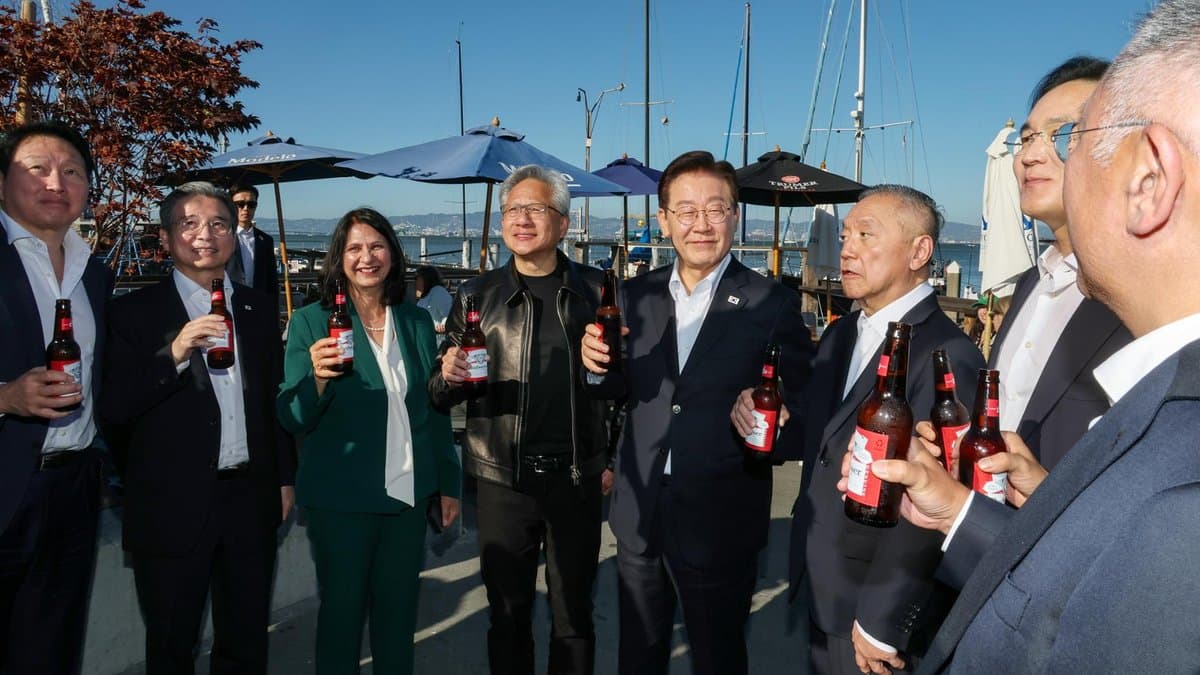
On Friday, July 24, 2026, South Korea hosted an AI Summit in San Francisco. President Lee Jae Myung attended in person, meeting separately with Jensen Huang (Nvidia), Sam Altman (OpenAI), Dario Amodei (Anthropic) and Hock Tan (Broadcom) before joining the summit. The figure announced there: $950 billion.
For scale, South Korea's annual GDP is roughly $1.8 trillion. So the headline number exceeds half the country's yearly economic output, announced at a single event. The obvious first reaction was to ask whether that can possibly be real.
Here's the deal: this is not cash changing hands. Most of it consists of non-binding MOUs and letters of intent, it sums projected activity across five years, and a substantial portion formalizes relationships that were already underway. That doesn't make it meaningless — but reading it correctly requires taking it apart.
Who signed what with whom
The announcement as stated:
| Korean company | Counterpart | Size | Form / scope |
|---|---|---|---|
| SK hynix | Nvidia | $500B+ | Letter of intent — comprehensive AI infrastructure partnership |
| SK Group (other) | Microsoft, Anthropic, AWS | ~$250B | Basis undisclosed |
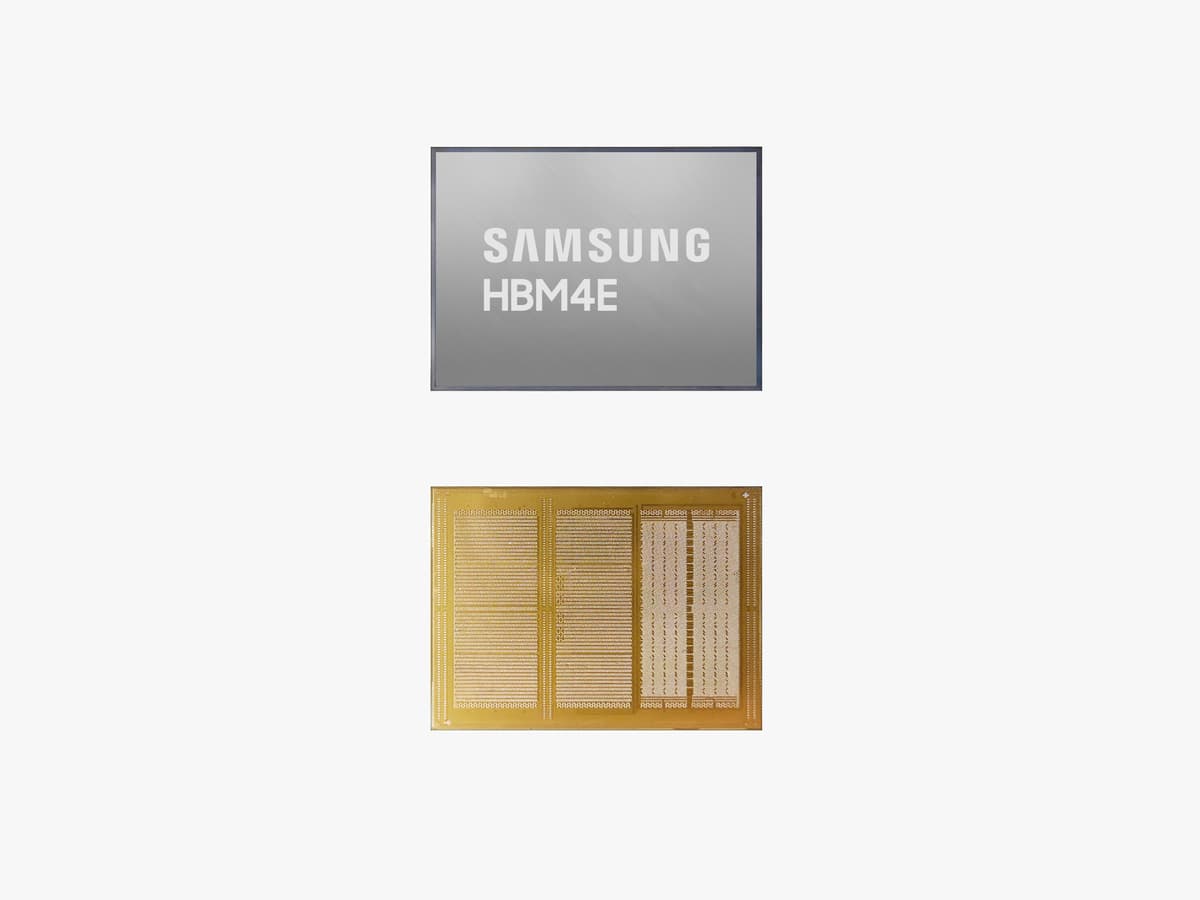
| Samsung Electronics | Broadcom | Up to $200B | MOU — HBM, foundry, advanced packaging through 2030 |
| SK Telecom | Nvidia | Undisclosed | Next-gen GPUs; 2GW data center targeted for 2027 |
| SK hynix | Microsoft | Undisclosed | Server memory supply partnership |
| Samsung SDS | Anthropic | Undisclosed | Deploy Claude across Korean businesses, expand enterprise AI |
| Hyundai Motor Group | Nvidia | Undisclosed | Physical AI — autonomous driving, robotics, AI factories; joint AI Robot Reference Platform |
| Naver | Nvidia, Brookfield | $10B | 200MW AI factory at GAK Sejong (expandable to 1GW) |
| Total | ~$950B |
SK Group accounts for $750 billion, Samsung for $200 billion. Those two explain almost the entire figure.
Executive quotes point at the strategy. Samsung Vice Chairman Jun Young-hyun: "In the era of AI, semiconductor solutions that tightly integrate memory, logic chips and advanced packaging are increasingly important." SK Chairman Chey Tae-won: "Competitiveness in the AI era depends not only on how well AI is utilized, but also on how much intelligence can be generated." President Lee unveiled a "San Francisco AI Declaration" and pledged to open Korea's "dynamic AI ecosystem" to the world.
Now let's take the number apart
This is where it gets interesting. The accounting problems IBTimes surfaced:
One, the units are mixed. The $950 billion blends revenue Korean firms expect to earn with money they plan to spend on American equipment. Two flows pointing in opposite directions, summed into one total. One industry source described it as "reflective of a broader pattern of exaggeration currently common across the AI industry."
Two, almost none of it is binding. Samsung–Broadcom is an MOU. SK–Nvidia is a letter of intent. Both are framework documents stating intent to cooperate, not confirmed orders. A Samsung official said the $200 billion figure "reflects the companies' projected activity over five years rather than a confirmed order."
Three, the time horizon is long. Every projection covers a five-year window through 2030, and some activity doesn't begin until 2027. Annualized, that's roughly $190 billion a year — much of which would have occurred anyway.
Four, the basis isn't disclosed. Outside the Broadcom and Nvidia figures, neither the government nor the companies explained how the roughly $250 billion attributed to SK's collaborations with Microsoft, Anthropic and AWS was calculated. That's more than a quarter of the total sitting in a black box.
Five, much of it predates the summit. SK acknowledged these collaborations "have been ongoing for some time." Industry insiders noted that much of this business was "effectively predetermined regardless of Friday's announcement," given how few suppliers of advanced memory exist. Only three companies make HBM at scale: SK hynix, Samsung and Micron. When Nvidia or Broadcom needs HBM, the destination list is short.
So the accurate framing isn't "$950 billion in new contracts were signed." It's: a government-hosted event produced an official tally of the business relationships expected to form over the next five years.
So was the summit pointless? What each side actually got
Discounting the headline doesn't mean nothing happened. Real things moved.
Korea's government got negotiating position. Semiconductors sit directly in the path of tariffs and export controls, and Korea has been walking a line between US trade pressure and the Chinese market. The framing "Korean companies bring $950 billion of business to the US" is a usable card in Washington. That the arithmetic is loose barely affects that function.
SK hynix got demand visibility. HBM currently sells as fast as it can be made, but the real problem is that you must commit billions to fab capacity today without knowing what demand looks like in three years. A $500 billion letter of intent with Nvidia carries weak contractual force but plenty of value as a demand signal underwriting capex decisions.
Samsung got a foundry customer. Broadcom is the largest player in custom AI silicon design, including Google's TPUs. Broadcom using Samsung foundry and advanced packaging means Samsung has a genuine opening in the advanced logic market where it has trailed TSMC for years. Jun Young-hyun's line about integrating memory, logic and packaging is the pitch attached to exactly this.
Naver got the most concrete deal. A $10 billion package with Nvidia and Brookfield to build a 200MW AI factory at its GAK Sejong data center, designed to expand to a full gigawatt. That's an actual infrastructure project rather than a framework document, and the amount is realistic relative to everything else on the list.
US big tech got supply security. The primary bottleneck in AI infrastructure expansion is HBM, and that supply is concentrated in Korea. For Nvidia and Broadcom, attending an event like this costs essentially nothing while locking in long-horizon allocation.
Anthropic's piece is worth noting too. Partnering with Samsung SDS to deploy Claude across Korean businesses secures a channel into the Korean enterprise market — Samsung SDS is a central systems integrator for Korean conglomerates. In the same week Anthropic appeared on AMD's stage and declined to sign Nvidia's open-weights letter, it quietly acquired a distribution partner in Korea.
How announcements like this have gone before
Large headline-number announcements have a mixed record.
The delivered case. Samsung's 2021 announcement of a US foundry fab in Taylor, Texas started at $17 billion and expanded from there, and the fab was actually built. Startup timing slipped repeatedly, though. Large capex announcements tend to be directionally right and chronologically late, almost without exception.
The inflated case. Foxconn's 2017 pledge to invest $10 billion in Wisconsin and hire 13,000 people is the canonical example. It got enormous political attention; actual investment and hiring came in at a small fraction of the original plan, and the agreement was renegotiated far downward. It's still cited as the reason investment figures announced at political events should never be taken at face value.
The middle case is the most common. AI infrastructure partnerships announced during state visits since 2025 — the large Gulf-state agreements with American tech companies being the clearest examples — converted only a portion of the headline into signed business. But that portion was still substantial. The announced figure is a ceiling; reality lands somewhere below it, and below can still be large.
This one is likely a middle case. HBM demand is real, and the structural fact that there are few alternatives to Korean supply is also real. The $950 billion total simply isn't a precise measurement of either.
How competitors respond
Taiwan and TSMC are the most direct competition. Samsung bundling advanced packaging into the Broadcom pitch targets TSMC's CoWoS bottleneck specifically. TSMC keeps expanding advanced packaging capacity and ramping its Arizona fabs. This contest gets decided by yield and delivery, not announcements.
Micron leverages its position as the only American company among the three HBM makers. The harder Washington pushes supply chain onshoring, the better Micron's relative standing — which is part of why Korean firms keep expanding US production footprints.
China comes from another angle. Cut off from the latest HBM by export controls, CXMT and others are pushing domestic development. The generational gap remains wide, but the speed at which it closes is the medium-term risk for Korean memory.
US policy itself is a variable. Tariffs, CHIPS Act conditions and the scope of export controls are all still in motion. This announcement is a card Korea played in that negotiation, and how it's received will shape the actual terms of execution.
AMD's arrival belongs in this picture too. The same week, AMD announced Helios into full production at 31TB of HBM per rack. Whether Nvidia or AMD wins the rack war, the HBM demand curve moves the same direction. For Korean memory makers, intensifying accelerator competition is unambiguously good news.
What actually changes for you
If you're an investor, don't read this as a buy signal. MOUs and LOIs are accounting nonentities. The metrics that matter are SK hynix's and Samsung's quarterly HBM revenue mix and their capex guidance. If demand is real, it shows up as capital expenditure before it shows up as anything else.
If you work in semiconductors, the substantive signal is Samsung's advanced packaging volume. When a large fabless customer like Broadcom actually starts using Samsung packaging, that's validation. Watch for first production volume, not the press conference.
If you're a Korean AI startup, the things worth tracking are Naver's 200MW GAK Sejong AI factory and SK Telecom's 2GW data center. More domestic GPU capacity means lower training and inference costs and a real alternative to foreign clouds for workloads that currently have none. That's a post-2027 story, though.
If you run enterprise IT, the Samsung SDS–Anthropic partnership is the nearest-term change. It creates a formal channel for adopting Claude inside Korean enterprise environments — genuinely meaningful for organizations that have struggled to onboard foreign AI services through security review and contracting.
If you follow policy, watch the actual text of the San Francisco AI Declaration and what follows it. Declarations carry no binding force, but documents like this get cited as reference points in subsequent negotiations. How it gets deployed in semiconductor tariff and export control discussions is the real thing to watch.
If you're a general reader, the takeaway is simple. This clarified what leverage Korea actually holds in the AI era. Not models. Not services. The memory that everything else runs on. That's both the strength and the vulnerability — memory is a brutally cyclical business.
🥄 Three Things You're Probably Wondering
— Is $950 billion actually coming? Not as stated. Most of it is non-binding MOUs and letters of intent summing five years of projected activity, and it mixes money Korean firms expect to earn with money they expect to spend. That said, HBM demand is genuine and supply options are structurally limited, so the amount that does materialize won't be small. Read the line items, not the total.
— So was the summit just theater? There's theater in it, but that's not all it was. Some pieces are concrete — Naver's GAK Sejong AI factory is a real project, and Samsung SDS–Anthropic is a new commercial relationship. And in the middle of semiconductor trade negotiations, the political function of an event like this is real. The accurate posture is to discount the number while acknowledging the substance.
— Who benefits more, Samsung or SK? Different in kind. SK already leads in HBM, so this mostly confirms an existing advantage. Samsung has the larger potential swing because Broadcom gives it a chance to strengthen foundry and advanced packaging, its weakest link. But Samsung's figure is a five-year MOU estimate, so its realization is more uncertain. Only actual shipment volumes two or three years out can answer this.
References
- Samsung, SK, Hyundai expand AI partnerships with Big Tech firms to $950 bil. — The Korea Times
- Samsung Elec, SK Group seal $950 billion deals as South Korea hosts AI powers — Reuters (via KFGO)
- South Korea unveils $950B in semiconductor partnerships — UPI
- Samsung, SK Group's $950 Billion AI Deals Draw Questions Over What the Math Really Means — IBTimes
- Lee Jae Myung, Jensen Huang tout Korea AI growth at San Francisco summit — Korea JoongAng Daily
- Samsung Electronics, SK Group seal $950B deals — The Manila Times
Numbers and criteria are as of announcement and may change. Investment calls are yours to make!