Twenty-four hours
On July 22, 2026, a complaint landed in San Francisco Superior Court. The plaintiff is Scott Winters, a former pastor from Florida. The defendants are OpenAI and CEO Sam Altman. Among the remedies he asked for: halt Health in ChatGPT until independent safety audits are complete.
On July 23, OpenAI made Health in ChatGPT available to every adult user in the United States.
That gap isn't the whole story, but it's the fastest way into it. OpenAI concluded the feature helps people and that a filed complaint isn't a reason to reverse that call. The other side sees a company pushing a tool deeper into people's lives after it has already hurt someone. Let's go through what actually shipped, and what's genuinely at stake.
Three parties: OpenAI, the plaintiff, and the US health system
OpenAI is pushing ChatGPT from general assistant toward life infrastructure, and health is the largest and most sensitive frontier in that plan. People already paste lab values into the chat box and describe symptoms to it; health questions have long ranked among the most common things users bring to ChatGPT. From OpenAI's seat, this is formalizing behavior that already exists rather than creating it.
Scott Winters, the plaintiff, is a former pastor. Per the complaint, in 2025 he asked ChatGPT (GPT-4o) about dizziness and blood pressure instability and was told, in substance, that it was "not something dangerous" — so he delayed care. He subsequently suffered a massive pulmonary embolism and says he lost his job, his ministry, and his home. His requested relief goes well past damages: stronger guardrails on health questions, removal of GPT-4o, deletion of related training data, and a halt to Health in ChatGPT.
The US health system is the backdrop and the reason. Lab results land in a patient portal with almost no explanation. The next appointment is weeks out. The bill is indecipherable. That vacuum is exactly where ChatGPT moved in. A shortfall in access created the demand for AI health interpretation — that's the structural fact underneath this whole story.
What actually shipped
| Item | Detail |
|---|---|
| Launch date | July 23, 2026 |
| Eligibility | Logged-in US users 18+ |
| Platforms | Web, iOS |
| Tiers | Free, Go, Plus, Pro |
| Connected data | Apple Health, US hospital systems, One Medical, Function Health |
| Models | Free = GPT-4.5 Instant / Paid = GPT-4.6 Sol |
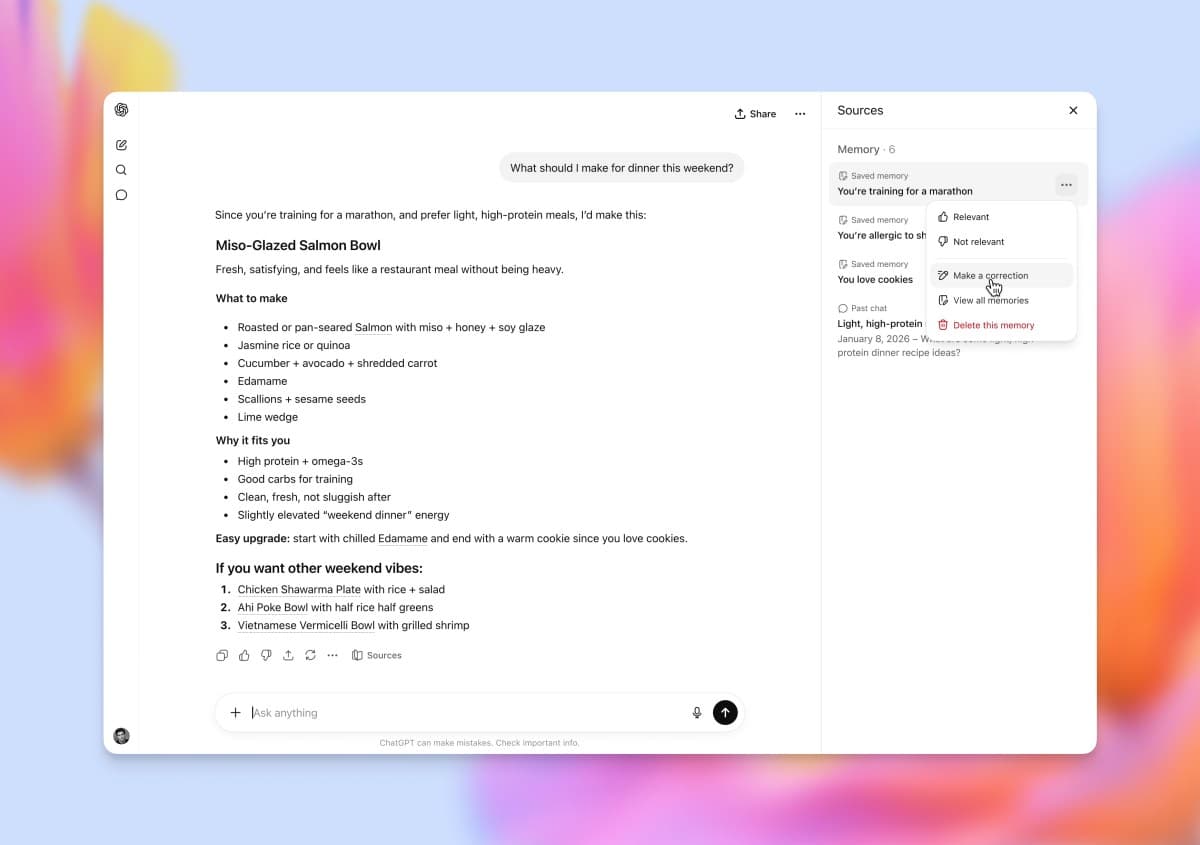
| Invocation | Tag @Health in a conversation to pull data in |
The capabilities cluster into four things: compare lab results against prior tests, summarize what changed since your last appointment, track sleep and activity against workouts, and pull connected data into any conversation with @Health.
There's a deliberate design choice visible in that list. OpenAI scoped the feature away from diagnosis. Everything enumerated is closer to "read and organize data you already have" than "reach a new clinical conclusion." It interprets existing records rather than generating fresh judgments. The legal motivation for that boundary isn't hard to read.
The privacy terms are specific. OpenAI states that connected records and Apple Health data are not used to train its foundation models, not used to target ads, encrypted at rest and in transit, and deleted within 30 days. That's a genuinely strong commitment — the training exclusion in particular gives up the standard playbook of improving a product by accumulating its own usage data.
One caveat matters a lot, though. ChatGPT is not a HIPAA covered entity. The obligations that bind hospitals and insurers don't bind OpenAI directly here. The protections above rest on company policy, not statute. Policies can change, and the external mechanism to prevent that change is weak.
Who gains what, and who carries what
OpenAI gains lock-in. Once you've connected medical records and Apple Health, that context doesn't port to a competing chatbot. General assistants are converging on capability, which makes differentiation hard — and a feature wired into your personal data holds users regardless of who has the better model this quarter. Extending it to the free tier reads clearly through that lens.
Users gain interpretation, and this shouldn't be dismissed. Getting a lab panel you can't parse, wanting to compare it to last year's numbers and not being able to find them in a portal — those are real frictions, and they're the kind of thing language models handle well. The value as an information-asymmetry reducer is genuine.
Clinicians carry the control problem. Patients already arrive with AI interpretations in hand. The difficulty is that when the interpretation is wrong, the cost of correcting it falls on the clinician's fifteen-minute visit. And as this lawsuit illustrates, when a wrong interpretation causes delayed care, the outcome isn't correctable at all.
Regulators carry a jurisdiction problem. A product classified as a medical device falls under FDA oversight; a general-purpose chatbot sits outside that boundary. Positioning the feature as organizing information rather than diagnosing is aimed precisely at that line. How to handle products that live on the boundary is the open regulatory question.
OpenAI's public position has been consistent throughout. Spokesperson Drew Pusateri: "ChatGPT is not a doctor and should never be used as a substitute for medical care, diagnosis or treatment." That sentence appears in the product framing and in the litigation response alike. The problem is that a disclaimer does not change user behavior, and that gap is the core of the dispute.
How products like this have gone before
There's a success lineage. The Apple Watch ECG and irregular-rhythm notifications are the model case. The feature stops at "something looks off, see a doctor." It doesn't diagnose — it triages. And it went through FDA clearance. Narrow scope plus regulatory engagement produced durable trust, and accumulated cases of atrial fibrillation caught by those notifications built the clinical credibility.
There's a failure lineage too. The symptom checkers of the 2010s largely landed here. You entered symptoms and got a ranked list of possible conditions, and study after study found accuracy problems that split into over-alarm or false reassurance — simultaneously missing emergencies and driving unnecessary ER visits. Most were eventually narrowed into health-system support tools or shut down.
The most instructive case is in between. IBM Watson Health raised enormous investment aimed at oncology treatment recommendations, ran into repeated questions about the reliability of those recommendations in real clinical settings, and was ultimately sold off. Not because the technology was primitive, but because of the distance between the level of evidence medicine demands and the level of evidence the product could supply.
Hold ChatGPT Health against those three and its position gets clearer. The feature design leans Apple Watch (bounded to interpretation), but the usage context leans symptom checker (an open text box that answers anything). What happens when a product's self-drawn boundary and its actual use diverge is not a hypothetical — this lawsuit is one instance of the answer.
How competitors respond
Google has been in this space forever, with search, health data, Fitbit, and medical-domain model research. But Google has been burned repeatedly on health information in search, and it's correspondingly cautious. If OpenAI crosses a line first, the natural Google play is to follow while occupying the regulator-friendly position.
Apple may be the quiet winner. ChatGPT Health pulling from Apple Health strengthens Apple's position as the health data hub without Apple taking on any clinical liability. It controls the gateway and owns none of the judgment. Strategically, that's the most comfortable seat at the table.
Anthropic has stayed notably more conservative here, weighting enterprise deployment inside healthcare organizations over direct consumer health advice. This episode will function as a live test of how large the legal exposure for direct-to-consumer health AI actually is, and the answer will shape how fast other labs move in.
Digital health startups get cut both ways. When ChatGPT gives away baseline interpretation for free, apps built on that alone lose their reason to exist. But the territory OpenAI explicitly declined — diagnosis, prescription, treatment planning — is left to companies willing to do it inside the regulatory perimeter. The competitive axis shifts from "who explains it better" to "who can be accountable for it."
There's also a paradox that rarely gets said out loud: the more accurate the tool becomes, the more dangerous it gets. An unreliable tool earns no trust, so it does bounded harm. A mostly-accurate tool earns trust, and the rare failure lands on someone who had good reason to believe it. That's the shape of the Winters case. If the chatbot had been wrong all the time, he never would have relied on it.
What actually changes
If you use ChatGPT in the US, connecting is opt-in. Two things to know before you flip it on: OpenAI says connected data isn't used for training and is deleted within 30 days, and that protection rests on company policy, not HIPAA. Decide with both facts in hand.
If you're outside the US, you're not eligible yet — it's US-only, and the integrations are US hospital systems, One Medical, and Function Health. That said, pasting lab results into a chatbot is already common everywhere. Worth remembering that doing so is you personally entering your medical information, with none of the protections above attached.
If you're a clinician, expect more of this in the room. Patients arriving with AI interpretations is already normal; now those interpretations will come fused with the patient's actual test history, which makes them far more specific and far more confident. The practical response is usually not rebuttal but marking where the AI was right and where it stopped being right.
If you build health products, the remaining market is inside the regulatory perimeter. The line OpenAI drew — "we don't diagnose" — is the opportunity. Clinically validated, cleared functionality is something a chatbot cannot imitate. You won't win on speed; you can win on evidence.
If you follow policy, the interesting part isn't who wins this case but which questions get litigated: whether disclaimers have force, whether a general-purpose chatbot can be a medical device, whether an order to delete training data is even technically executable. None of these have settled precedent, and one ruling could define product design for years.
🥄 Three Things You're Probably Wondering
— So can I actually trust this? For interpreting lab values and organizing records, it's useful. For deciding whether to seek care when you have symptoms, don't use it — that's precisely where this lawsuit originated. OpenAI itself keeps repeating that ChatGPT is not a doctor, and that framing is worth taking literally.
— Is my medical record going into the training data?
OpenAI states that connected records and Apple Health data are excluded from foundation model training, not used for ad targeting, and deleted within 30 days. Keep in mind this is company policy rather than a legal obligation — and that the conversation itself, once @Health data is pulled in, falls under standard ChatGPT conversation policies, which is a separate question.
— If the lawsuit succeeds, does the feature shut down? A halt is one of the remedies sought, but filing a complaint doesn't stop anything on its own — that would require injunctive relief, and the bar for that is high. The bigger deal would be the other requests: removing GPT-4o or deleting training data would have far wider consequences if granted. Predicting the outcome at this stage would be guessing.
Sources
- Health in ChatGPT — OpenAI official
- OpenAI launches Health in ChatGPT a day after lawsuit seeks to block it — SiliconANGLE
- OpenAI makes ChatGPT Health available to all U.S. users — TechCrunch
- ChatGPT's medical advice nearly killed a Florida man, lawsuit against OpenAI claims — CBS News
- ChatGPT Medical Advice Lawsuit — What The Research Says About AI Diagnosis — Forbes
Feature scope and policies are as of announcement and may change. Also, this is not medical advice — if something feels wrong, go see an actual doctor!