Six Minutes Into the Session, the Sidecar Tripped — This Time in the Other Direction
At 9:06:02 a.m. on Friday, July 31, the Korea Exchange triggered a sidecar on the main board. It had done the same thing three days earlier, except that one was a sell sidecar and this one was a buy sidecar. Kospi 200 futures had jumped 129.90 points, or 14.97%, to 997.50, which suspends program buy orders for five minutes. The Kosdaq tripped at the same moment. It was the first time in eleven trading sessions that both markets had triggered buy sidecars together.
The index never came back down. The Kospi closed at 6,595.45, up 1,001.89 points — a gain of 17.91%. It touched 6,630.77 intraday, up 18.5%. Both the percentage and the point move are all-time records. The previous record was 11.95%, set on October 30, 2008, the day the Bank of Korea and the U.S. Federal Reserve announced a $30 billion currency swap line. For scale: the best single day during the 1998 Asian financial crisis was +8.50%, and the sharpest post-COVID rebound day in 2020 was +8.60%. On a closing basis, the Kospi had never before gained more than 10% in a session.
The individual names are stranger than the index. SK hynix rose 29.95% to 1,718,000 won and closed limit-up. Korea widened the daily price band from plus or minus 15% to plus or minus 30% in June 2015, and this was the first time SK hynix had hit the ceiling since. A company that is the second-largest stock in the entire market simply does not close limit-up; that is a phenomenon reserved for small caps. Samsung Electronics rose 26.81% to 262,500 won — its own largest single-day percentage gain on record — and rejoined the trillion-dollar market cap club on the strength of that one session. SK Square and Samsung Electro-Mechanics also closed limit-up. Samsung C&T gained 19.56%, Hyundai Motor 10.54%. The Kosdaq finished up 11.63% at 719.76.
Here's the part you cannot skip: this was a reaction, not an event. On July 28 the Kospi fell 10.84%. On July 29 it dropped as much as 12.63% intraday, touching 5,262.77. Both the Kospi and the Kosdaq triggered circuit breakers on two consecutive days — something that had never happened in the history of the Korean market. So within four sessions, Korea recorded its first-ever back-to-back dual-market trading halts and its largest single-day gain ever.
Add up the month and the Kospi fell 22.19% in July. Per Koscom Check data cited by the Korea Economic Daily, that ranks behind only October 1997 (-27.25%) and October 2008 (-23.13%) among monthly declines. This is a market that closed June at 8,476.48 and set a record closing high of 9,114.55 on June 22. The 1,001 points on July 31 filled part of the hole. It did not fill the hole.
Four Actors: Two Memory Makers, U.S. Big Tech, and One Chairman
Start with SK hynix, which currently sits at the center of the global HBM market. In the second quarter of 2026 it reported revenue of 79.3187 trillion won and operating profit of 60.5426 trillion won, for a 76% operating margin. Revenue rose 257% year over year and operating profit 557%. First-half cumulative revenue reached 131.895 trillion won, crossing 100 trillion won for the first time in company history. Net profit came in at 93.9226 trillion won — larger than revenue, which tells you that non-operating items such as affiliate stakes dominate that line, so do not read it as core earnings power. On the operating numbers alone, though, this is close to the ceiling of what a memory company can produce.
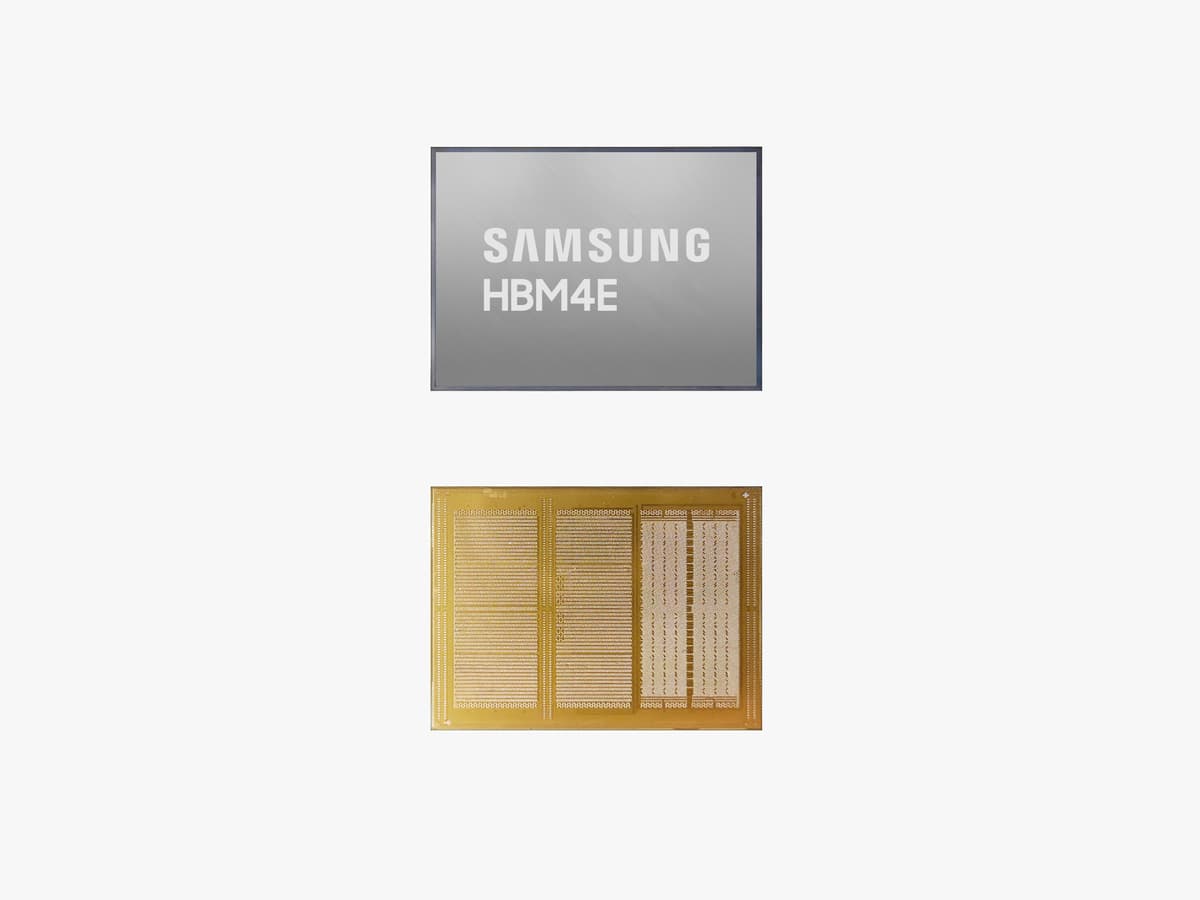
Second is Samsung Electronics, which reported on July 30: consolidated revenue of 171.5 trillion won and operating profit of 89.5 trillion won, both quarterly records, with operating profit up 1,813.8% year over year. The Device Solutions division alone accounted for 127.5 trillion won of revenue and 89.2 trillion won of operating profit. Run that second number: 99.7% of the company's entire operating profit came from semiconductors. The flip side is that the finished-products side — phones, TVs, appliances — posted an 800 billion won operating loss, squeezed by component cost inflation. Samsung also said it shipped the industry's first HBM4E samples to major customers during the quarter.
Third is U.S. Big Tech, and this is where the July 31 rally actually came from. Microsoft reported fiscal Q4 on July 29: revenue of $90.0 billion, up 18%; operating income of $40.6 billion; net income of $35.8 billion; diluted EPS of $4.81. Intelligent Cloud grew 32% to $39.3 billion and Azure grew 43%, with Satya Nadella noting that Azure revenue passed $100 billion for the first time. But the number the market cared about was capital expenditure: $35.8 billion in the quarter and $115.9 billion for the fiscal year. The same day, Meta guided 2026 capex to $130–145 billion, raising the low end of its prior $125–145 billion range. A day later Amazon reported AWS revenue of $42.2 billion, up 37% — its fastest growth in eighteen quarters — and disclosed that purchases of property and equipment had risen $66.1 billion year over year.
Fourth is Chey Tae-won, chairman of SK Group. A regulatory filing on July 30 showed that he had bought 3,620 common shares of SK hynix on the open market at an average price of 1,353,677 won, for roughly 4.79 billion won total. Against SK hynix's market capitalization, that is a rounding error. What matters is that it was the first time Chey had ever held SK hynix shares in his own name; until then his control ran entirely through SK Square, which holds about 20% of the company via 146.1 million shares. On July 17 he had already said publicly that it is better to hold quietly than to keep buying and selling, and that memory will keep being needed, so given time the stock trends up. Two weeks later he put his own money behind the sentence.
Two more forces moved this market from offstage. One is China. On July 28, reports said a Chinese state-owned enterprise had begun mass production of DUV lithography equipment — roughly five units this year and around twenty next year — destined for CXMT, SMIC, and Hua Hong. The other is leveraged ETFs. Enormous retail money had piled into single-stock leveraged products tracking Samsung and SK hynix, and when the index cracked, that structure came back as forced liquidation.
What Actually Happened Across Those Four Days
In sequence: through July 27 the Kospi sat around 6,755. On the morning of July 28, the China DUV report landed on top of an overnight semiconductor selloff in New York, and a sell sidecar tripped at the open. By late morning the index was down more than 8%, triggering a level-one circuit breaker that halted all trading for twenty minutes. The Kospi closed down 732.09 points, or 10.84%, at 6,023.66. Samsung fell 8.27% and SK hynix 10.08%.
July 29 was worse, and this is the part that should be uncomfortable for anyone who thinks fundamentals set prices. It was the day SK hynix reported the largest quarterly results in its history, and the market read them as bad news. The FnGuide consensus called for revenue of 83.9391 trillion won and operating profit of 63.9868 trillion won; actual operating profit came in at 60.5426 trillion won, below consensus. "Record ever, but short of expectations" is exactly the combination that feeds a cycle-peak argument. The index sank as far as 5,262.77 intraday, with a 965.75-point range from high to low. Both markets tripped circuit breakers for a second straight day — a first — and the Kospi closed at 5,663.24.
That same day the government convened an emergency macro and financial meeting at the Seoul Government Complex. Finance Minister Koo Yun-cheol, Bank of Korea Governor Shin Hyun-song, Financial Services Commission Chairman Lee Eog-weon, Financial Supervisory Service Governor Lee Chan-jin, and presidential economic adviser Ha Joon-kyung agreed to pursue a cap limiting an individual's investment in single-stock leveraged ETFs to 20% of their total financial assets. A prior package announced July 16 had already raised the minimum cash deposit for trading those products from 10 million won to 30 million won and lifted the minimum trading unit from one share to twenty, with the deposit increase taking effect July 31. Regulators paired the measures with a line about the economy's fundamentals remaining sound.
July 30 brought another slide, to 5,593.56. Samsung reported record results that day and the market barely blinked. After the close, Chey's purchase filing appeared, and overnight the U.S. session finally digested Microsoft's numbers: the Philadelphia Semiconductor Index rose 8.2%, the Nasdaq 2.78%, the S&P 500 1.66%. On Friday morning, Korea absorbed all of it at once.
The flow data on July 31 tells you who did what. Foreign investors net bought 7.25 trillion won of Kospi stocks and institutions added 1.15 trillion won. Retail investors sold 8.26 trillion won. Foreigners, who had been selling all month, had now bought for two straight sessions. The won strengthened 13.4 won to close at 1,424.0 per dollar, and Kospi market capitalization climbed back above 5,000 trillion won for the first time in four sessions.
| Item | Jul 28 | Jul 29 | Jul 30 | Jul 31 |
|---|---|---|---|---|
| Kospi close | 6,023.66 | 5,663.24 | 5,593.56 | 6,595.45 |
| Change | -732.09 pts (-10.84%) | -360.42 pts (-5.98%) | -69.68 pts (-1.23%) | +1,001.89 pts (+17.91%) |
| Market mechanism | Sell sidecar + circuit breaker | Second straight dual-market halt (first ever) | — | Buy sidecar at 9:06:02 |
| SK hynix | -10.08% | Sharp drop | Closed 1,322,000 won | +29.95% limit-up, 1,718,000 won |
| Samsung Electronics | -8.27% | Down | — | +26.81%, 262,500 won |
| Trigger | China DUV report, U.S. chip selloff | SK hynix operating profit misses consensus | Samsung results, Chey purchase filing | Microsoft and Amazon results, SOX +8.2% |
One more number puts the damage in perspective. Over the three sessions through July 30, SK hynix fell 29.9% and Samsung fell 19.34%. SK hynix had set an all-time high of 2,987,000 won on June 25 and closed at 1,322,000 won on July 30 — less than half, in roughly five weeks. Friday's limit-up recovered a slice of that, not the whole thing.
What Each Side Actually Walked Away With
SK hynix got back control of its own narrative. When the market on July 29 reduced record results to the phrase "missed consensus," everything else in that release got buried. HBM4 hit the operating speeds customers required while delivering what the company calls industry-leading power efficiency and cost competitiveness, with mass shipments starting in Q2 and production ramping in the second half. HBM4E sample supply was completed in the first half. Long-term supply agreements were finalized with roughly ten major customers, including Nvidia, giving the company mid-to-long-term demand visibility. Cash and equivalents rose 33.6 trillion won during the quarter to 88 trillion won, against 18.6 trillion won of debt, for a net cash position of 69.4 trillion won. Friday's limit-up is the market starting to price the paragraph it skipped on Wednesday.
Samsung got the beginning of a valuation reset. Having 99.7% of operating profit come from one division is a strength and a vulnerability at the same time, and during the July collapse only the vulnerability got priced — the argument being that if the memory cycle rolls over, this company has no cushion. The 26.81% move is a vote that the argument arrived early. It is worth saying plainly, though, that even after that day Samsung remains well below its June high.
Chey Tae-won got timing. Roughly 4.8 billion won is not a large sum for the head of SK Group, and 3,620 shares disappears next to SK Square's 146.1 million. But a chairman buying in his own name for the first time ever, at a moment when the stock is down more than 50% from its peak, is a sentence the market knows how to read. The stock closed limit-up the next day, which made the purchase look impeccably timed, and it answered the one question retail investors were actually asking: what does management think this company is worth right now?
Foreign investors got price. The same cohort that sold 18.5 trillion won of Kospi shares over the course of July bought back 7.25 trillion won in a single day. JPMorgan's Korea equity research argued the leveraged ETF unwind was complete and that hedge funds had worked through roughly 90% of their deleveraging; strategist Mixo Das described the Korean market as having entered an attractive range on depressed valuations. Retail investors were on the other side of that trade, net selling 8.26 trillion won. Holding on through three days of collapse and then selling into the first day of recovery is, unfortunately, the pattern.
This Has Happened Before — Once It Was the Bottom, Once It Was a Trap
Take the success case first. October 30, 2008. After the Lehman bankruptcy, dollar funding fear had pushed the Kospi below 1,000. Then the Bank of Korea and the Federal Reserve announced a $30 billion currency swap line. The Kospi rose 115.75 points, or 11.95%, to close at 1,084.72 — the record that stood until last Friday. And it really was near the bottom: the index recovered through 2009 and cleared 2,200 by 2011. The common thread is that the rally rested on a structural change. The problem was dollar liquidity, and the announcement solved the dollar liquidity problem.
The failure case is cleaner in the U.S. On October 13, 2008, the Dow rose 11.1% — at the time, its largest single-day percentage gain ever — right after European governments announced sweeping guarantees for their banking systems. Markets decided the crisis was over. The Dow then fell another 25% from that level before bottoming in March 2009. Record single-day gains sometimes mark a bottom, but far more often they mark volatility, because the biggest up days in history cluster inside bear markets rather than bull ones. That is not a cute observation; it is the base rate.
The memory industry has its own scar tissue, and it is the most relevant comparison here. The 2017–2018 super cycle ended with SK hynix reporting record annual results for 2018 — while in the fourth quarter of that same year DRAM average selling prices had already fallen 11% quarter over quarter and NAND prices 21%. Q4 2018 revenue dropped 13% sequentially to 9.9381 trillion won and operating profit fell 32% to 4.4301 trillion won. By 2019, annual operating profit had collapsed to the 2 trillion won range. "Record quarterly earnings" and "cycle top" landed in the same quarter. That is precisely why the market can look at a 76% operating margin and feel nervous rather than reassured.
So how should you read Friday? Honestly, there isn't enough evidence yet to call it. If you ask whether something structural changed the way it did in October 2008, the answer is partly yes — Microsoft and Amazon confirming they are not slowing AI capex is real information, not sentiment. But the reading that most of the move was technical retracement after forced leveraged liquidation is equally defensible. Han Ji-Young of Kiwoom Securities pointed out that the Kospi had failed to hold a 5%-plus gain the previous session, which suggests there is still supply waiting to sell into rebounds.
What the Competition Is Calculating Right Now
Micron is in the most comfortable seat. Its fiscal third quarter, ended May 28, produced record revenue of $41.46 billion, with DRAM alone at $31.3 billion — up 343% year over year and 76% of total revenue. Fiscal Q4 guidance is $50.0 billion plus or minus $1.0 billion at roughly 86% gross margin. HBM4 is in high-volume shipment for its lead customer's platform, with HBM4E targeted for volume production in calendar 2027. While Korean chip stocks halved and then rocketed, Micron sold into the same demand in a far calmer market. It carries identical cycle risk, though, and Korea's convulsion this week was a preview for Micron holders too: the peak-cycle argument can get priced at any moment, violently.
China is the variable that actually matters from this week. CXMT is already in DDR5 volume production and has been gaining presence in commodity DRAM. Layering domestically produced DUV lithography on top of that made the market seriously price, for the first time, a scenario in which the equipment bottleneck loosens and Chinese capacity additions accelerate. But almost nothing about that report has been externally verified — resolution, overlay precision, actual production yield. Five tools this year and twenty next year is small next to ASML's annual DUV shipments. What the market repriced was direction, not present capability, and direction can be repriced back just as fast.
For Nvidia the week cut both ways. One of the things that broke Korea on July 28 was a renewed round of circular-financing worries around Nvidia and OpenAI in New York. On the other hand, SK hynix disclosing five-year long-term supply agreements with roughly ten customers including Nvidia means Nvidia has been locking down HBM supply on multi-year terms. Rising memory prices pressure Nvidia's cost structure, but the alternative — not having the memory — is worse, and Nvidia has clearly made that trade.
The procurement organizations inside Big Tech are running the most practical math of anyone. Microsoft acknowledged that a large share of its capex goes to short-lived assets, primarily CPUs and GPUs. Meta raised the floor of its 2026 capex range. Amazon disclosed a $66.1 billion year-over-year increase in property and equipment purchases. For these companies memory is no longer something to negotiate over; it is something to secure. That maps directly onto Samsung's second-half outlook, which says supply constraints are expected to continue even as production increases, and onto SK hynix raising its capex plan to the high-40 trillion won range for the year.
Then there is an unexpected player: the regulator. Korean financial authorities have identified single-stock leveraged ETFs as the amplifier of this crash and are pushing the 20%-of-assets cap, higher transaction costs, mandatory simulated trading, and a legal framework for emergency market stabilization all at once. None of that touches Samsung's or SK hynix's fundamentals, but it directly touches their daily volatility. The price discovery mechanism for Korea's two biggest chip stocks is being rewired in real time.
So What Actually Changes for You
If you are a retail investor — the most usable lesson of the week is about leverage structure, not about chips. Retail net sold 8.26 trillion won on the day of the record rally. That means holding through three days of collapse and then capitulating on the rebound, and if you were in a leveraged product, "holding through" may not even have been an available choice. The minimum deposit is now 30 million won, the minimum trading unit is twenty shares, and a 20%-of-total-assets cap is being pursued. The rules are actively changing; go re-read the terms on anything leveraged you currently hold.
If you work in the semiconductor industry — this was a week in which earnings and share prices moved on completely separate tracks. SK hynix printed a 76% operating margin and the stock collapsed; two days later, with no new company information whatsoever, it closed limit-up. Keep that gap in mind the next time internal demand signals feel obviously bullish. Two operational signals are worth extracting: HBM4 mass shipments began in Q2 and scale significantly in the second half, and both Samsung and SK hynix expect supply constraints to persist through the back half of the year. Materials, equipment, and advanced packaging schedules are being built on that premise.
If you are an investor — separate two things. First, the demand evidence got stronger this week, not weaker: $115.9 billion of Microsoft fiscal-year capex, $130–145 billion of Meta 2026 capex, AWS growing 37%. Those are disclosed figures in primary filings, not reporting. Second, Korean chip equities nonetheless traded on an entirely different logic. A 22.19% monthly decline followed by a 17.91% single day means positioning and leverage, not fundamentals, were setting the price. Expect the same three triggers to dominate for a while: results versus consensus, China supply headlines, and the level of outstanding leverage.
If you are a regular consumer — there is one thing that will reach you, and it is memory prices. The reason Samsung's finished-products division lost 800 billion won this quarter was component cost inflation. Samsung's own memory business made Samsung's own phone business unprofitable. That dynamic is running across the whole industry, so expect it to show up in laptop, phone, and PC pricing over the next several quarters. As long as server allocations get first claim on supply, consumer-grade memory stays expensive.
🥄 Three Things You're Probably Wondering
— So was that the bottom? Too early to call. The only genuinely new information behind the rebound was U.S. Big Tech capex guidance; the reading that this was a technical bounce after forced leveraged liquidation is equally consistent with the facts. The July 31 close of 6,595.45 is still a long way below the record closing high of 9,114.55 set on June 22.
— If SK hynix earnings were that good, why did the stock crater? Not because the numbers were bad, but because they were less good than expected. FnGuide consensus was 63.9868 trillion won of operating profit; the company delivered 60.5426 trillion won. That landed on the same two days as the China equipment self-sufficiency report and an intensifying cycle-peak argument, and forced liquidation of single-stock leveraged positions multiplied the drawdown. It was the collision, not any one item.
— Is Chairman Chey's 4.8 billion won purchase really that meaningful a signal? On size alone it is symbolic, and the next day's limit-up owed far more to Microsoft's earnings than to him. What is hard to walk back is that a group chairman bought in his own name for the first time ever, which is why the market weighted it heavily. Whether it was a correct call on the cycle is something you can only judge several quarters from now.
Further Reading
- Samsung, SK Hynix shares jump nearly 30%; Kospi posts record daily gain — KED Global (Jul 31, 2026) — Consolidated account of the record session and the week that preceded it.
- SK hynix Announces 2Q26 Financial Results — SK hynix Newsroom (Jul 29, 2026) — Primary source for revenue, operating profit, net cash, HBM4 ramp, and capex discipline language.
- Samsung Electronics Announces Second Quarter 2026 Results — Samsung Semiconductor Global Newsroom (Jul 30, 2026) — Device Solutions figures and the second-half memory supply outlook in Samsung's own words.
- Microsoft FY26 Q4 Earnings Release — Microsoft Investor Relations (Jul 29, 2026) — Azure growth of 43% and $115.9 billion of fiscal-year capital expenditure.
- Amazon.com Announces Second Quarter Results — Amazon Investor Relations (Jul 30, 2026) — AWS at $42.2 billion, up 37%, plus the $66.1 billion increase in property and equipment purchases.
- Meta Reports Second Quarter 2026 Results — Meta Investor Relations (Jul 29, 2026) — The $130–145 billion 2026 capex range and the raised low end.
- Kospi jumps 18% to post record daily gain — The Korea Herald (Jul 31, 2026) — Flow data, currency move, and analyst commentary from the session.
- KOSPI rockets 18% in record-breaking rally — The Korea Times (Jul 31, 2026) — Three-day drawdown figures for SK hynix and Samsung, plus Kiwoom and JPMorgan views.
- South Korea sets 20% cap on leveraged stock bets, says fundamentals are sound — KED Global (Jul 29, 2026) — The emergency meeting, the attendee list, and the leveraged ETF measures.
- Chairman Chey Tae-won's first personal SK hynix purchase — Newspim (Jul 30, 2026) — Share count, average price, and context from the regulatory filing.
Numbers and criteria are as of announcement and may change. Investment calls are yours to make!