Record revenue, flat profit, minus 7%
Here's the deal: Naver reported Q2 2026 results on August 7. Consolidated revenue came in at ₩3.3888 trillion, up 16.2% year over year and a quarterly record. Operating profit was ₩520.3 billion, down 0.2%. Shares fell 7.08% the same day.
Revenue up 16% with flat operating profit means one thing arithmetically: costs grew as much as revenue did. The company named three drivers — AI infrastructure buildout, expansion of N Pay Connect terminals, and strategic costs including World Cup broadcast rights.
What's interesting is that the market read this as bad news. Apply the same structure to US big tech and the conclusion flips. Microsoft, Google, and Meta all took margin pressure from sharply higher AI capex over the past two years, and the market largely accepted it as necessary investment. Naver did not get that benefit of the doubt. Why not is the real subject of this quarter.
The segment picture tells a different story
| Item | Q2 2026 | Note |
|---|---|---|
| Revenue | ₩3.3888T | +16.2% YoY, quarterly record |
| Operating profit | ₩520.3B | −0.2% YoY |
| Naver platform | ₩1.9022T | Domestic search, advertising |
| Financial platform | ₩470.7B | Pay and fintech |
| Global expansion | ₩1.0159T | Global C2C and others |
| Margin pressure | AI infrastructure · N Pay Connect terminals · World Cup rights | Company explanation |
| AI ad contribution | 60%+ of advertising revenue growth | AI-based optimization and targeting |
| AI Briefing ads | Click-through +30%, purchase conversion 3x | New ad product |
| Share reaction | −7.08% | On results day |
The most notable row is that the Global expansion segment crossed ₩1 trillion — 30% of total revenue. Naver has spent years trying to shed its identity as a domestic search monopoly, and it now has a structure where global C2C generates more than double the domestic financial platform's revenue. That didn't get nearly enough attention in coverage of the print.
Second: AI is already contributing to revenue. AI-driven ad optimization and targeting improvements produced more than 60% of advertising revenue growth, and the newly launched AI Briefing ad product delivers click-through rates over 30% higher than conventional search ads with 3x the purchase conversion, per the company. So it isn't that Naver's AI investment hasn't started paying back — on the advertising side, payback has already begun.
Third, the cost items have fundamentally different shapes. The three the company named — AI infrastructure, N Pay Connect terminals, World Cup rights — recoup in completely different ways. World Cup rights are a one-off content cost: it disappears when the tournament ends, and during it you get traffic and ad inventory. N Pay Connect terminals are a merchant acquisition cost: money goes out when you place the hardware and comes back as fees every time that merchant processes a payment. Multi-year payback, works if churn is low — a textbook customer acquisition structure.
Only AI infrastructure is different. It's a fixed asset, and recovery starts when customers show up to rent it. The first two items extend businesses Naver already runs well. AI infrastructure is a business the company has never operated. The accurate read is that what made the market uncomfortable wasn't the size of the profit decline (0.2%) but the character of the spending. Zero point two percent is a tiny number. What the market saw behind it was a capital expenditure plan running for years.
So where's the problem? In the fact that the thing consuming profit isn't advertising AI.
Where the profit went: an AI factory built with Nvidia
The largest item compressing Naver's margin is AI infrastructure. And the scale of that infrastructure is enormous relative to the company's existing business.
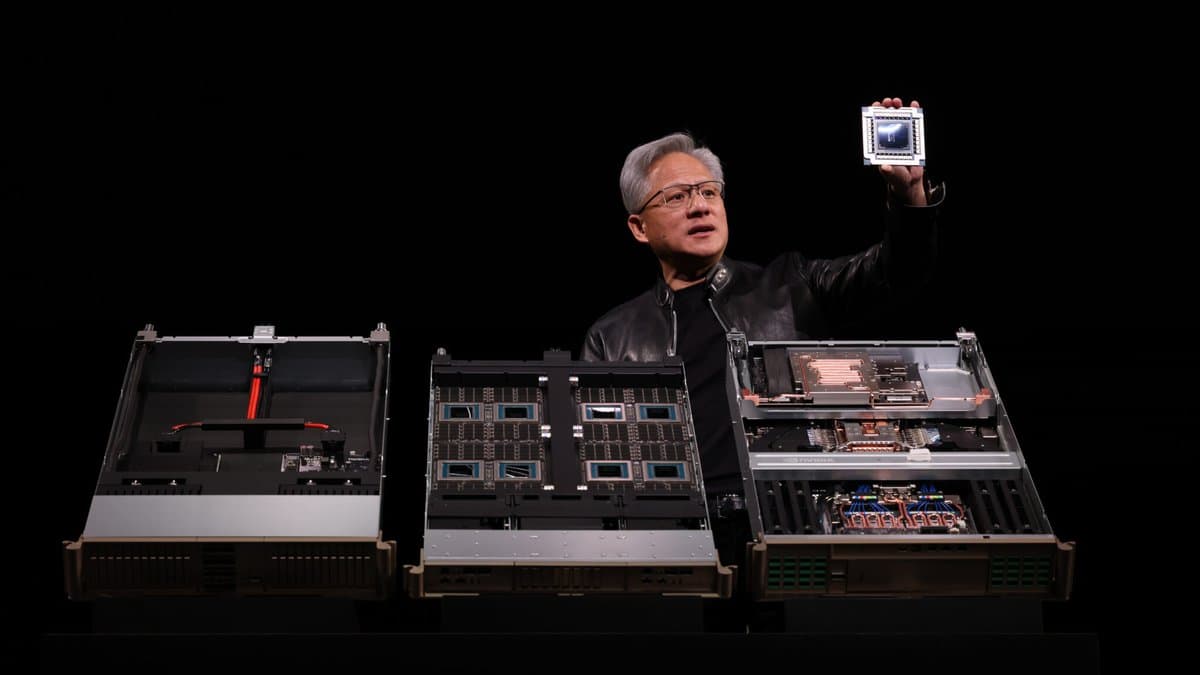
Per Nvidia's newsroom, Naver — together with Nvidia and Brookfield — will expand the Nvidia DSX AI factory deployed at its GAK Sejong hyperscale data center from 55 MW to 200 MW by 2028, with a longer-term objective of reaching 1 GW of AI infrastructure. The target customers are Korean enterprises, government agencies, startups, and AI cloud customers domestically and abroad.
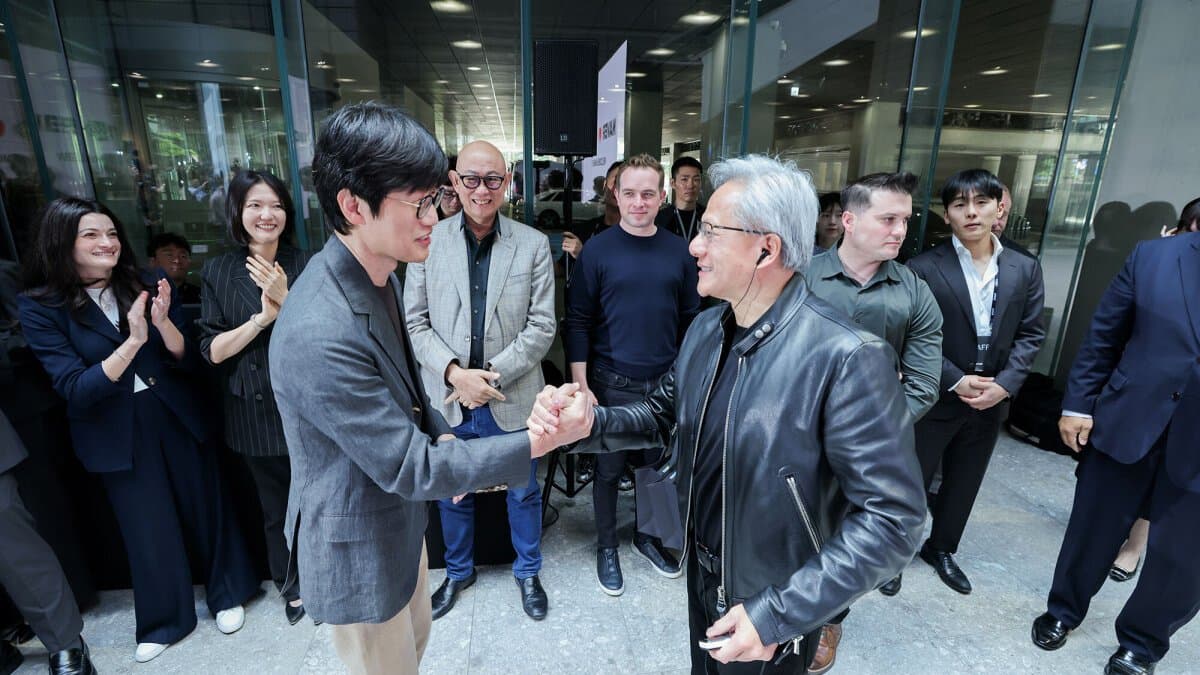
There's a capital structure change attached. Nvidia is investing roughly $1 billion in Naver, with Naver issuing about 7.24 million new shares via private placement. That gives Nvidia roughly a 4.5% stake, making it Naver's third-largest shareholder. The GPU supplier becomes a major shareholder in the customer.
Understand that arrangement and a 0.2% operating profit decline reads differently. Building gigawatt-class AI infrastructure means depreciation, power costs, and GPU purchases hitting the income statement for years. Q2's margin pressure is the beginning, not the end. That's the reasonable explanation for a 7% drop — the market wasn't repricing one quarter's profit, it was redrawing the profit curve for several years.
Let's do the math on what 1 GW means
The fastest way to get a feel for these numbers is to convert power into money. A rough industry heuristic is $10–15 million of capital expenditure per megawatt of IT load. Actual figures swing widely with GPU pricing, cooling approach, and grid interconnection terms, but it's enough for scale. Apply it and 55 MW lands around $500–800 million, the 200 MW target for 2028 lands at $2–3 billion, and the long-term 1 GW goal at $10–15 billion.
Set that against Naver's annual operating profit — on the order of ₩2 trillion — and the weight becomes visible. Even 200 MW requires capital equal to several years of operating profit, and 1 GW is a different category entirely. Which is why this isn't a Naver-alone project: it's structured with Nvidia (capital and GPUs) and Brookfield (infrastructure capital) alongside. Brookfield is a global infrastructure asset manager that invests in power plants, telecom networks, and logistics facilities — long-duration cash flow assets. Capital of that character participating means this project is being treated as an infrastructure finance deal, not an IT project.
There's an item that routinely gets overlooked here: power. Running 200 MW year-round works out to roughly 1.75 billion kWh annually. Against Korean industrial tariffs and grid interconnection conditions, that's a scale that shows up in regional power planning. Part of why Sejong was chosen is land and power availability, and every subsequent entity trying to build AI data centers in Korea meets the same bottleneck. The binding constraint on Korean AI infrastructure competition is likely the grid, not GPU allocation.
Finally, look at the depreciation structure. GPUs typically depreciate over four to five years while the actual generation cycle turns roughly every two. That creates a window where the asset remains on the books after its competitiveness has faded. Two ways to close that gap: push utilization as high as possible to recover the investment inside the depreciation window, or redeploy older GPUs to inference-only duty to extend useful life. The real profitability of Naver's AI factory turns on that operational skill — which is why the metric the company should be highlighting isn't revenue, it's utilization.
Who gains
The Korean government and its sovereign AI policy are the clearest beneficiaries. Sovereign AI — processing domestic data on domestic infrastructure — has become a common policy theme across countries, and realizing it requires somebody to build a large data center. If Naver takes that role, the government secures national AI infrastructure without carrying the capital cost. It dovetails neatly with the state-backed national foundation model program.
Nvidia's gain is textbook. Invest $1 billion for 4.5%, and that company builds 1 GW of Nvidia GPU infrastructure. The investment returns as GPU revenue, and the equity appreciates if the infrastructure succeeds. Nvidia has repeated this pattern in several places; it draws circular-financing criticism, but commercially it's highly efficient.
Naver is going after a business model transition. Its revenue engine has been attaching advertising to search traffic, which has a ceiling set by the size of the domestic market. Selling AI infrastructure opens customers beyond domestic corporates to government and overseas cloud buyers. The company has signaled meaningful revenue from this business several quarters out, which means 2026 is designed as an investment year.
Conversely, Naver shareholders are being asked for years of patience, and there's a structural disadvantage here. US big tech AI capex rides on top of an existing multibillion-dollar cloud revenue base — a proven payback channel. Naver is building that channel now. The same investment earns a different premium depending on whether the payback path is validated. The 7% drop reflects that difference.
Korean AI startups get a real opportunity. More large-scale GPU capacity available domestically at reasonable prices addresses one of the biggest constraints Korean AI companies have faced — securing training compute. If domestic infrastructure scales to 200 MW, that constraint eases substantially. The condition attached is that pricing has to be competitive against foreign clouds.
Advertisers are a beneficiary worth naming too. AI Briefing ads delivering 30%+ higher click-through and 3x purchase conversion versus conventional search ads means more output per unit of budget. That said, this is also a pattern that shows up in every new ad surface: performance is strong while competition is thin, and efficiency converges toward average as advertisers pile in and prices rise. If you're running on this product now, you're probably in its most favorable window. From Naver's side, whether that efficiency actually holds determines how durable this leg of ad revenue growth is.
Kakao, Amazon, and the "investment year" narrative
Look at comparable moments. The famous one is Amazon, which generated almost no profit through the 2000s while reinvesting in fulfillment centers and AWS, and the market tolerated it for a long time. The reasons are clear: revenue growth stayed high, Bezos explained the logic in shareholder letters every year, and above all AWS's scale was overwhelming by the time it started earning. Naver needs the same three things: sustained revenue growth, clear communication, and proof of the payback moment.
On the failure side, Kakao is instructive. Kakao invested across many new businesses simultaneously in 2021–2022 and multiplied its subsidiaries, complicating the cost structure of consolidated results. The market turned not because it invested but because it wasn't clear which investment would pay off when. The lesson is clean: if you declare an investment year, you have to name the payback year too.
Third, Meta in 2022. Metaverse spending crushed profit and the stock fell hard; recovery came once Meta separated the investment line item in disclosure and paired it with cost discipline. The core fix was visibility into what was being invested. Once investors could see where core-business profit ended and new-business investment began, they could recalculate. As Naver's AI factory scales, that separated disclosure gets more important.
There's also a domestic success case: Naver's own webtoon and commerce expansion. It kept pushing domestic search advertising profits into content and commerce, and the result is a Global expansion segment now generating over ₩1 trillion a quarter. This company has completed a reinvestment cycle before. The difference this time is capital intensity — content businesses invest in people and IP, while data centers front-load fixed costs and collect revenue later.
How the competitive board moves
Google has kept gaining share in Korean search, and the trend of AI answers occupying the results page is a structural threat to Naver. Products like AI Briefing ads exist because of that pressure. A 30% CTR lift and 3x purchase conversion look more like a counterattack than a defense — but whether search traffic itself holds is a separate question.
Kakao and other domestic platforms have chosen differently on AI infrastructure, leaning on foreign clouds and partnerships rather than building gigawatt-class capacity. Which choice was right resolves in a few years. If Naver owns infrastructure and secures margin, Naver was right; if cloud prices keep falling, building becomes overinvestment.
SK and Samsung affiliates are the variable. Few entities in Korea have the capital, land, and power procurement capability to build AI data centers at scale, and if they enter seriously the domestic market shifts to supply competition. How long Naver's first-mover position lasts is the question.
Foreign hyperscalers are the most direct competitors. AWS, Azure, and Google Cloud keep growing their Korean regions and dominate on economies of scale. Naver's differentiator isn't price, it's data sovereignty. Regulated industries that must keep data onshore — finance, healthcare, public sector — plus government demand are the real target market for the AI factory. Whether that market is big enough to fill 1 GW determines whether this investment works.
Finally, having Nvidia as a shareholder cuts both ways. A GPU supplier holding 4.5% guarantees allocation stability and engineering collaboration, but it also narrows architectural freedom. Room to adopt domestic NPUs or alternative accelerators shrinks structurally. With the Korean government making domestic AI chip adoption an explicit policy goal, that tension may surface eventually.
There's a risk running the other direction in this structure too. When Nvidia takes new shares via private placement, existing shareholders are diluted by exactly that much. 7.24 million shares equaling roughly 4.5% of shares outstanding means current holders gave up 4.5% of their claim to buy $1 billion and GPU access. Whether that's a good trade depends on the profitability of the infrastructure business that billion builds. Dilution is a confirmed cost; the return is still an assumption — and that's another calculation folded into this week's decline.
So what actually changes
For regular users, the visible change is advertising. AI Briefing ads converting 30% better also means the boundary between the AI-summarized area of a results page and the advertising on it keeps blurring. Convenience rises and so does the effort required to tell what's an ad. That isn't a Naver-specific problem — it's the AI search problem generally.
For Korean developers and AI startups, this is genuinely good news. Domestic GPU infrastructure scaling toward 200 MW lowers the difficulty of securing training and inference compute. If you're on a project where data can't leave the country, you gain an option. Pricing and availability need checking once the service actually opens.
For enterprise decision-makers, there's a new procurement option. In finance, healthcare, and public sector work where data residency is required, choices have been effectively limited. A domestic AI factory at 200 MW eases that. When evaluating, look beyond price-performance to multi-year contract terms and expansion headroom. Infrastructure businesses routinely offer favorable early terms and adjust later.
For investors, the message is clear. For the next few years Naver gets judged on revenue growth and the timing of AI payback rather than on margin. The 7% drop says the market doesn't yet trust that transition — which also means there's meaningful room for re-rating if evidence of payback arrives. The metric to watch isn't operating profit. It's contracted volume and utilization in the AI infrastructure business.
One sentence: Naver is moving from a search advertising company to an AI infrastructure operator, and Q2 was the first quarter where the cost of that transition landed heavily on the income statement.
🥄 Three Things You're Probably Wondering
— So what does this mean for me? If you're building AI services in Korea, quite a lot. Naver scaling its Sejong AI factory from 55 MW to 200 MW with a 1 GW long-term target means more domestic options for renting large GPU capacity — especially for projects where data can't leave the country.
— Why now? Because delaying AI infrastructure investment means paying more later. With GPU supply tight and power procurement increasingly competitive, Nvidia investing $1 billion for a 4.5% stake was a deal that locked in both allocation and engineering collaboration. Naver traded margin for time and volume.
— Will flat operating profit persist? Probably for a while. Infrastructure aimed at 1 GW carries depreciation and power costs that hit the P&L for years. On the advertising side, though, the company says AI already produces more than 60% of ad revenue growth. When the infrastructure business clears its own cost is the crux, and it's too early to call.
Sources
- NAVER Corp. — Earnings materials (official IR)
- ETNews — Naver Q2 revenue ₩3.3888 trillion, a quarterly record
- Hankyung — Naver posts double-digit revenue growth as operating profit dips on AI investment
- inews24 — Naver Q2 record revenue, operating profit falls on AI investment
- Newspim — Naver catches its breath on AI investment: revenue +16%, profit flat
- The Scoop — Why Naver shares fell 7% despite a record quarter
- Ajunews — Naver operating profit ₩520.3B, down 0.2% on AI investment
- Edaily — Naver Q2 record revenue as AI and commerce monetization accelerates
- NVIDIA Newsroom — NAVER, NVIDIA and Brookfield to Expand Korea's National AI Factory Infrastructure Buildout
- NVIDIA Newsroom — NAVER Expands AI Infrastructure With NVIDIA
- KED Global — Naver, Nvidia to form AI factory alliance in sovereign AI push
- UPI — Nvidia plans $1B investment in South Korea's Naver
Numbers and criteria are as of announcement and may change. Investment calls are yours to make!