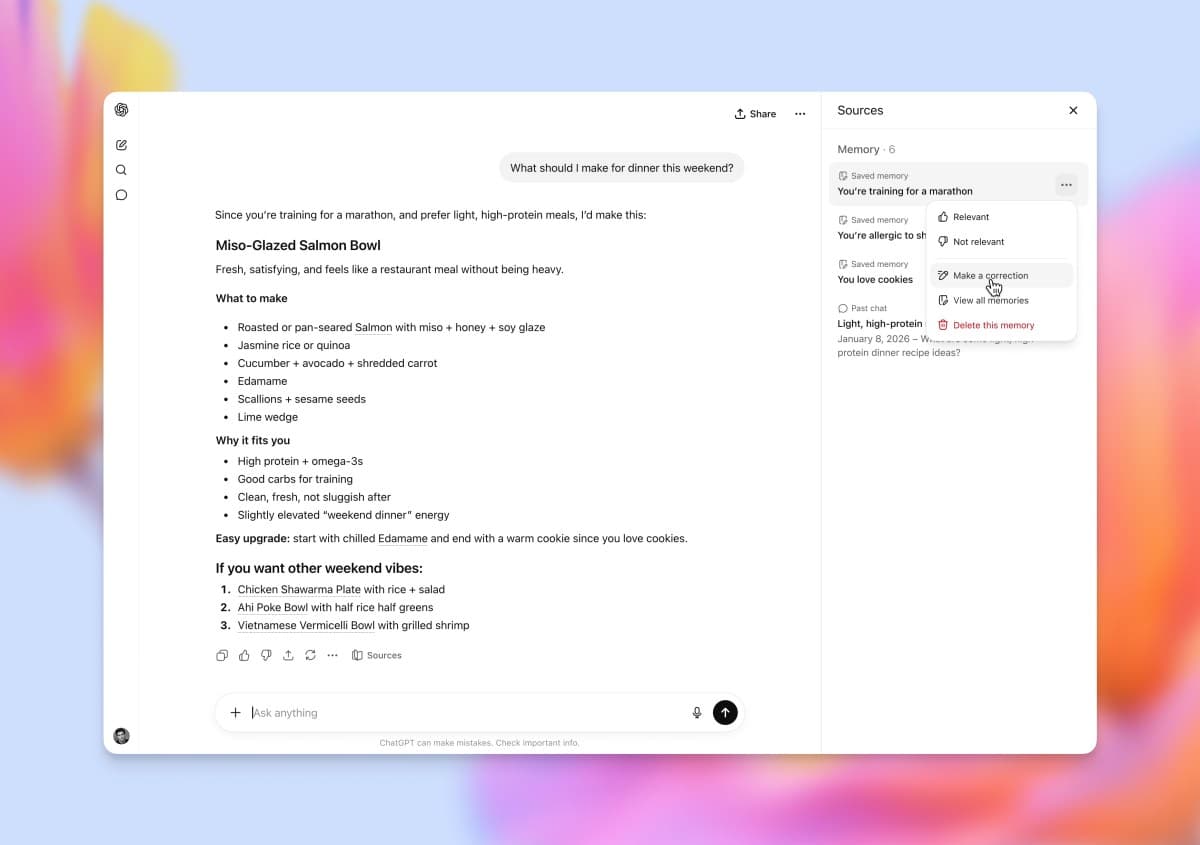
Use ChatGPT for free, and there's a sponsored card under your answer
Here's the deal: on August 11, OpenAI quietly edited a blog post. A paragraph appeared at the top of "Testing ads in ChatGPT" reading, "ChatGPT Ads has now launched in the United Kingdom, Mexico, Brazil, Japan, and South Korea. We're continuing to expand to more markets this year."
It wasn't a new post. It was the fourth update stacked onto a piece originally published on February 9, 2026. But that single paragraph carries weight. What launched in the US six months ago under the word "test" is now a commercial product running in nine countries. One of them is South Korea.
There's a wrinkle worth naming right away, because most coverage got it wrong. Plenty of outlets translated this update as "OpenAI brings ChatGPT ads to Korea on August 11." The actual date ads switched on in Japan and South Korea was June 22, announced directly by OpenAI's VP of Monetization, Benji Shomair, on LinkedIn. The UK went live even earlier, on June 6. The August 11 update is closer to a completion stamp: Brazil and Mexico, the last two holdouts on the five-market list, finally came online, so OpenAI marked the whole set as launched.
Which means if you've been using ChatGPT on the Free or Go tier in Seoul or Tokyo, you've been ad-eligible for nearly two months. If you haven't noticed any, that's not because there aren't any — it's because ad load is still deliberately thin. OpenAI's own March disclosure put roughly 85% of ChatGPT users in the eligible pool, while fewer than 20% actually encountered an ad on a given day.
The people selling the ads, and how OpenAI got here
OpenAI put its advertising intentions in writing in late 2025, in a post laying out five principles: mission alignment, answer independence, conversation privacy, choice and control, and long-term value. That last one is the interesting one. "We do not optimize for time spent in ChatGPT. We prioritize user trust and user experience over revenue." That's a sentence written specifically to pre-empt two decades of engagement-optimization criticism aimed at Facebook.
The same post expanded ChatGPT Go, the $8-a-month entry tier, to the US and everywhere ChatGPT is available. Free and Go are the two layers that see ads. Plus, Pro, Business, Enterprise, and Edu don't. The structure is blunt and honest: ads pay the infrastructure bill for people who don't pay, and if you don't want ads, you can pay.
Execution accelerated hard in 2026. February 9: US test opens. March: OpenAI hires Dave Dugan, who spent 12 years running advertising and agency relationships at Meta, as head of global ads solutions. March 26: the pilot extends to Canada, Australia, and New Zealand, and OpenAI confirms to Reuters that ads crossed $100 million in annualized revenue within six weeks of launch. May 5: the self-serve Ads Manager beta opens to all US advertisers, adding CPC bidding. May 7: five new markets announced. June and August: all five go live.
Dugan's framing at Cannes Lions in June compresses the entire business case. Roughly 20% of ChatGPT queries carry direct commercial intent, and more than that carry upper-funnel purchase potential. Consider the difference between typing "best running shoes" into a search box and telling a chatbot, "I've got wide feet and my knees hurt, what should I wear for a 5K?" The second is a far more expensive signal, and it only exists in a conversational interface.
The audience got bigger at exactly the right moment. On August 6, OpenAI disclosed that ChatGPT had passed one billion weekly users, and in the same post handed free users unlimited text conversations. Giving the free tier more while monetizing that free tier with ads landed in the same week. That's design, not coincidence.
The buy side assembled just as fast. Criteo became the first formal adtech partner in March, followed by Kargo, Adobe, Pacvue, and StackAdapt. In the UK, dentsu was one of four launch partners from February 6 and is running live campaigns for brands including Hilton. Competitive intelligence firm Adthena counts three dentsu clients among the top nine UK ChatGPT advertisers — a figure that comes from an interested party's own measurement, so treat it accordingly.
What actually shipped, according to the documentation
Here's the real rollout sequence. OpenAI's Ads Manager Availability page lists all nine countries as "Available" as of August 11.
| Market | Ads live | Self-serve Ads Manager | Note |
|---|---|---|---|
| United States | 2026-02-09 | 2026-05-05 | reaches logged-out users, most features |
| Canada, Australia, NZ | 2026-03-26 | — | second pilot wave, English-language |
| United Kingdom | 2026-06-06 | 2026-06-22 | first European market, ASA jurisdiction |
| Japan, South Korea | 2026-06-22 | — | first in Asia, first non-English markets |
| Brazil | reflected 2026-08-06 | Available | first Latin American market |
| Mexico | confirmed 2026-08-11 | Available | last of the five |
The product specification is fully public too, which is the clearest evidence that "test" is doing a lot of work as a word here.
| Item | Detail |
|---|---|
| Placement | below the end of a response, labeled sponsored, visually separated |
| Components | advertiser name, favicon, headline, description, landing URL, image |
| Recommended length | headline ~16 characters, description ~32 characters |
| Buying | CPM (Reach objective) or CPC (Clicks objective) |
| Recommended opening bid | $3–$5 CPC |
| Auction | relevance-weighted second-price |
| Reporting | impressions, clicks, spend, CTR, avg CPC, avg CPM, conversions |
| Targeting | conversation context plus advertiser "context hints" (not exact-match keywords) |
| CPM trajectory | $60 in February → $25 by April (some buyers reported $15) |
| Minimum spend | $200–250K in February → $50K in April → removed May 5 |
An email OpenAI sent advertisers on August 5 added three more things, confirmed by a company spokesperson to Business Insider: campaigns that optimize toward specific conversions like sales or sign-ups, a carousel format showing multiple products from a single advertiser, and measurement integrations with Hightouch and Triple Whale. The carousel looks structurally like Google's shopping carousel, except it's confined to one advertiser's catalog for now.
The most revealing document isn't the product page, though. It's the Ad Tools Terms published July 31, which contain an entire section on "Sponsored Agents," defined as "advertiser-sponsored conversational experiences that allow users to interact with an AI-generated representative for an Advertiser's business, products, or services." The terms make the advertiser responsible for that agent's content, configurations, actions, and output as if it had built the thing itself, and fold any legal claim about it into the same indemnification framework covering ordinary ads. That is contract language for a format that does not publicly exist. The bridge from banners-and-links to advertiser-operated chatbots has been drawn on paper, even if nobody's walked across it yet.
Equally important is what hasn't shipped — especially for people in the new markets. The ad policies document states plainly that ads for financial services outside the US are generally prohibited, and that ads for health services outside the US are generally prohibited. During the initial test period, allowed categories are largely lifestyle and household goods, local services, travel and experiences, and digital products or education. Gambling, alcohol, tobacco, adult content, counterfeits, political advertising, and individual job or housing listings are all blocked. There are placement exclusions too: no ads near personal health, mental health, or political conversations; none for accounts identified as under 18; none in Temporary Chats; and none in the ChatGPT Atlas browser during this test.
And one sentence in the help center deserves attention from anyone outside the US: "Ad controls are only available for Free and Go users in the US." Turning off ad personalization, clearing ad data, and checking why a particular ad appeared are documented as US-only capabilities. It's possible the doc simply hasn't caught up with the rollout. But as written on August 14, ads arrived in five new markets ahead of the controls that govern them — which is exactly the sequencing a privacy regulator notices first.
Who gets what out of this
OpenAI gets a third revenue leg. Until now the money came from subscriptions and API usage, both of which only extract value from people who pay. Most of that one billion weekly users doesn't. That enormous free tier has been a pure cost line, and ads are the only practical mechanism for converting it into revenue. The scale is still modest, though: the last disclosed figure was $100 million annualized, against a company target of $2.5 billion in ads revenue by the end of 2026. That's a 25x gap with four and a half months to close it.
Advertisers and agencies get new inventory at an unusually low barrier. The minimum spend is gone, self-serve is open, and CPMs fell from $60 to $25 in under six months. Criteo reported that ChatGPT-referred users convert at close to twice the rate of traditional search in retail categories, up from the 1.5x it first reported in March. But that's Criteo measuring Criteo's own client base, and independent verification at scale doesn't exist yet. Similarweb data cited in May put overall ChatGPT ad CTR at 0.68%, with the top quartile at 1% and the best-performing brands at 1.57% — modest numbers by search advertising standards, from a small early sample.
Adtech vendors are the quiet winners. Criteo, Adthena, LiveRamp, Hightouch, and Triple Whale all raced to own the measurement and migration layer on a brand-new platform. Adthena shipped AdBridge in April to port existing Google Ads campaigns into ChatGPT with a single account connection; LiveRamp wired its CAPI Hub in June. When a new ad platform appears, the first reliable profits go neither to the buyers nor the seller but to the plumbers in between. That pattern is repeating precisely.
Free users are trading attention for capability. They got unlimited text chats, better model access, and image and file tools — and in exchange, a sponsored card sometimes appears under an answer. If you genuinely don't want ads, there are two exits: upgrade to Plus or Pro, or stay on Free and take the no-ads option that comes with fewer daily messages and reduced tool access. That second option is the concrete form of the promise in OpenAI's principles: there will always be a way not to see ads.
Paying subscribers got a new reason to keep paying. An ad-free experience is now a feature of the paid tier. It's the same restructuring Netflix performed when it launched an ad-supported plan and implicitly redefined its existing plans as "the ones without ads." The denser the free tier's ad load gets, the stronger the upgrade pressure becomes, automatically.
Commerce brands and publishers split. ChatGPT is increasingly where product research starts, and until now brands appeared there only through organic mention. Now that placement is purchasable. Content publishers see it differently: search referral traffic is already eroding, and the platform is now selling the slot underneath the answer that replaced their link.
The Korean and Japanese ad markets just gained a new auction house. Excluding China, Tokyo and Seoul are the two largest advertising markets in Asia, and OpenAI posted regional client partner and customer success roles in both cities back in May. Korea is also a market OpenAI has publicly described as having the second-highest number of paid ChatGPT subscribers in the world. That last fact cuts both ways, though — ads only reach Free and Go users, so a market skewed toward paying subscribers is a market where a bigger slice of the audience is structurally unreachable.
Companies that walked this road before — two that made it, two that didn't
Worked: Google AdWords, 2000. What made search advertising durable wasn't the ads, it was the separation. Google physically separated paid results from organic ones, labeled them clearly, and sold placement through a pay-per-click auction rather than selling rank outright. Because the results themselves stayed uncorrupted, search survived two decades of monetization. That's why OpenAI puts answer independence first among its principles and keeps repeating that ads run on separate systems from the chat model, with no advertiser ability to shape, rank, or alter responses. It's copying the textbook openly.
Worked: Facebook's mobile News Feed ads, 2012. Facebook's stock halved after its IPO largely because mobile ad revenue was effectively zero. The fix wasn't porting sidebar banners to phones — it was placing ads inside the content stream, shaped like the content around them. OpenAI's carousels, and the Sponsored Agents concept sitting in its terms of service, are the next iteration of the same logic: stop attaching a banner to the conversation and make the conversation itself the ad format.
Failed: paid inclusion and paid placement in the early search portals. In the early 2000s, several search companies sold rank position or index inclusion directly. Revenue arrived quickly; trust didn't survive it. Users stopped believing the results, and the market went wholesale to the company that kept its results clean. The lesson transfers cleanly: in a conversational interface, if the boundary between answer and advertisement blurs even once, no amount of ad revenue buys the credibility back.
Failed: Amazon's Alexa. This was the largest attempt yet to monetize a conversational assistant with advertising, and it didn't work. Voice has no visual margin to insert an ad into, and users reacted badly when the assistant appeared to favor a brand. Alexa accumulated billions in losses and effectively abandoned ad monetization. The decisive difference for ChatGPT is the screen — you can build a visually separated slot beneath an answer. Starting with a text card at the bottom of a response rather than a spoken recommendation suggests OpenAI studied that failure closely.
And the company that went the other way: Perplexity. It introduced sponsored follow-up questions in November 2024 and then exited advertising entirely in February 2026. The stated reason was trust. As one executive told the Financial Times, "the challenge with ads is that a user would just start doubting everything. We are in the accuracy business." There was also a commercial reality underneath the principle: Perplexity's ad revenue never reached 0.1% of total revenue. Whether that was a stand for integrity or a graceful exit from a business that wasn't working depends on who you ask.
How the competition answers
Google is in the most comfortable position by a wide margin. It booked over $294 billion in advertising revenue last year — three orders of magnitude above OpenAI's $100 million annualized run rate. It's already placing ads alongside AI Overviews and has said publicly it intends to bring ads to the Gemini app. Google's weapon isn't a new format; it's existing assets. Millions of advertiser accounts, mature measurement infrastructure, and twenty years of agency relationships. For a media buyer, ChatGPT is a channel you have to learn. Google is a channel where the budget already sits.
Meta has roughly $196 billion in ad revenue and the best targeting data in the industry. It's also, pointedly, where OpenAI recruited Dave Dugan from. Meta's likely counter is to use its own assistant as an upper-funnel intent sensor and route what it learns into feed targeting — selling outside the conversation rather than inside it, which is the opposite of OpenAI's approach.
Microsoft holds Copilot and the Bing ad business, and occupies the awkward seat of being both OpenAI's largest partner and a competitor in this specific lane. It has enterprise distribution and existing ad inventory. The bigger ChatGPT ads get, the easier it becomes for Microsoft to justify pushing ads into Copilot.
Perplexity and Anthropic have taken the mirror position: no ads, as a product claim. Claude carries no advertising; Perplexity dropped its program. Every increment of ad density in ChatGPT's free tier raises the marketing value of "we don't put ads in your answers." The weakness of that stance is obvious too — without ad revenue, there's no way to fund a free tier at scale, so the ad-free players concede reach.
Naver and Kakao feel this most directly in Korea. If ChatGPT gradually captures the starting point for product and local-service discovery, and now carries paid slots at that starting point, it eventually pressures the CPCs of Korea's incumbent search and place advertising. It's not an immediate threat. OpenAI's allowed categories in Korea are narrow — household goods, local services, travel, digital products — and financial and health advertising is prohibited outside the US. A meaningful share of Korean search ad revenue lives inside exactly those blocked categories. That's the seawall, for now.
So what actually changes
For everyday users in the new markets, it already changed. If you're on Free or Go with an adult account, a card labeled sponsored can appear below your answer. Your conversation content doesn't go to advertisers — they receive aggregate impressions and clicks only. Ads stay away from personal health, mental health, and political conversations, and don't appear in Temporary Chats. If you want out entirely, upgrade or take the free no-ads option with reduced message limits. One caveat: the ad personalization settings menu may not be visible on your account yet, because OpenAI's own documentation still describes ad controls as US-only.
For media buyers, this is the entry window. Korea, Japan, the UK, Brazil, and Mexico are all on the availability list and there's no minimum spend. Four things to prepare: make sure your landing pages aren't blocking the OAI-AdsBot crawler, which handles landing page verification, brand safety review, and relevance assessment; rewrite creative for a brutally short format at roughly 16 and 32 characters; install the pixel or Conversions API if you want conversion optimization; and put UTM parameters on landing URLs so existing analytics can isolate the traffic. If you sell financial services, healthcare, alcohol, or gambling, just wait — outside the US you're prohibited.
For commerce brands, carousels and conversion optimization are the substantive change. Until now the unit was a single product card; being able to show a catalog favors brands with depth. But performance data still has wide error bars. The 2x conversion figures all come from interested parties, and a 0.68% CTR is low by search standards. Treat the cheap early CPM as an experimental budget, not a proven channel.
For investors, the gap is the whole story: $100 million annualized against a $2.5 billion year-end target. Adding countries alone won't close that. Closing it requires raising ad density — how often an ad appears per conversation — and the moment density rises, OpenAI's own stated benchmark of "no negative impact on consumer trust metrics" comes under strain. The metric to watch isn't the country count. It's impressions per user and whether dismissal rates hold.
For developers, two things matter. First, OAI-AdsBot: if your robots.txt blocks it, campaigns pointing at your site can't run. Second, Sponsored Agents. The presence of that definition in the terms of service means OpenAI is preparing a structure where advertiser-built conversational agents operate inside ChatGPT — which is where the apps and connectors ecosystem starts merging with the ads ecosystem. If you're building for ChatGPT today, assume an ad layer may eventually sit on top of it.
For general readers, this is a pattern the internet has run many times, playing out in fast-forward. A new platform appears, gives itself away free to build scale, then attaches advertising to that scale to recover costs. ChatGPT is completing the cycle faster than anything before it: three years and three months from free launch to advertising, three years and eight months to a billion weekly users. The difference this time is where the ad sits. Not next to a list of blue links, but underneath a conversation people use to work through things they'd tell a friend.
🥄 Three Things You're Probably Wondering
— When exactly did ads start showing up in my country? For Japan and South Korea, June 22. For the UK, June 6. Brazil and Mexico came in early August. The August 11 blog update reads like a launch announcement but it's really a completion notice. If you haven't seen an ad, ad load is still thin — and if you're on Plus, Pro, Business, Enterprise, or Edu, you'll never see one.
— So what I tell ChatGPT goes to advertisers? Not according to the documentation. Advertisers have no access to your chats, chat history, memories, or personal details, and receive only aggregated views and clicks. Your conversation is used to pick which ad appears, but that processing stays inside OpenAI. The structure is stated clearly; how solidly it holds in practice isn't something anyone outside the company can verify yet.
— Can a brand pay to get a better answer? OpenAI states that ads run on separate systems from the chat model and that advertisers cannot shape, rank, or alter responses. The current format is structurally separated too: the answer finishes, then a labeled card appears below it. That said, the Sponsored Agents language now sitting in the Ad Tools Terms describes advertising moving inside the conversation. If that ships, this boundary has to be re-examined. Calling it settled would be premature.
Sources
- Testing ads in ChatGPT (OpenAI, published 2026-02-09, last updated 2026-08-11) — the original announcement. The February US launch, the March 26 Canada/Australia/NZ expansion, the May 7 five-market plan, and the August 11 "has now launched" line are all stacked chronologically on one page.
- Our approach to advertising and expanding access to ChatGPT (OpenAI) — the five ads principles in full, including the "we do not optimize for time spent" commitment and the promise of a permanent ad-free path.
- Ads Manager Availability (OpenAI Help Center) — the country table showing all nine markets, including Korea, marked Available.
- Ads in ChatGPT: The Basics (OpenAI Help Center) — the advertiser-facing spec: ad components, CPM and CPC buying, $3–$5 recommended CPC, relevance-weighted second-price auction, and reporting metrics.
- Ads in ChatGPT (OpenAI Help Center) — eligibility, personalization signals, sensitive-topic exclusions, the Temporary Chat and Atlas carve-outs, and the "ad controls are only available in the US" line.
- Ad policies (OpenAI) — allowed and disallowed categories, including the provisions prohibiting financial and health services advertising outside the US, which matter most in the newly launched markets.
- Ad Tools Terms (OpenAI, 2026-07-31) — where "Sponsored Agent" is defined and made the advertiser's responsibility. Contract language for a format that hasn't shipped.
- ChatGPT ads go live in Japan and South Korea, and UK gets self-serve (PPC Land, 2026-06-22) — the basis for the actual Asia launch date, sourced to OpenAI VP of Monetization Benji Shomair's LinkedIn post.
- OpenAI makes ad upgrades for ChatGPT as it ramps up global reach (Business Insider, 2026-08-07) — the August 5 advertiser email: carousels, conversion optimization, Hightouch and Triple Whale integrations, plus Brazil and Mexico.
- 'Expand thoughtfully': OpenAI offers ChatGPT ads to new markets (Digiday, 2026-05-07) — Dave Dugan's own words on the expansion, plus analyst reasoning for why the UK, Japan, and Brazil were picked first.
Numbers are as of announcement and may change.